Class 7 SST Chapter 8: How the Land Becomes Sacred
Full A-Z Detailed Notes (Easy-to-Understand Student Guide) New NCERT Book: Exploring Society: India and Beyond – Part II (2026-27)Hello Class 7 friends! This chapter is super interesting because it shows how our beautiful land of India is not just mountains, rivers, and forests – it is holy and special for millions of people. We call this "sacredness". The chapter explains why certain places feel magical, why people travel long distances (called pilgrimages), and how these journeys connect all of us as one big Indian family.
Everything is explained in simple words with examples, pictures, key points, and activities – just like your teacher would explain in class. Let's dive in step by step!
1. The Big Questions (What will we learn?)
- What is ‘sacredness’?
- How does the land become sacred?
- How do sacred sites and pilgrimage networks connect with the life and culture of the people?
- What role did sacred geography play in the cultural integration of the Indian Subcontinent?
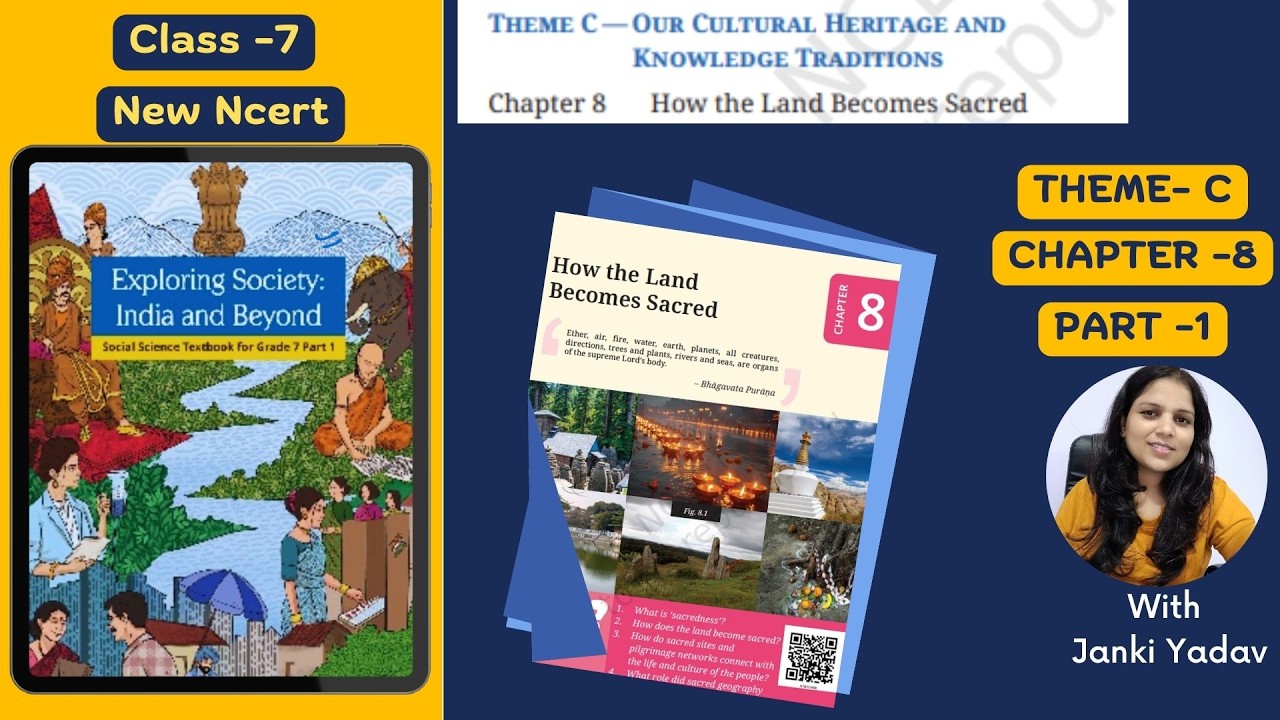
Quote to Remember: "Ether, air, fire, water, earth, planets, all creatures, directions, trees and plants, rivers and seas, are organs of the supreme Lord’s body." – Bhāgavata Purāṇa
2. What is ‘Sacredness’? (Super Simple Explanation)
Sacredness means something that gives us deep respect, love, and holy feelings. It can be:
- A special place or shrine (like a temple or dargah)
- A holy journey (pilgrimage)
- Even the land, rivers, trees, or mountains
It is connected to religion, spirituality, geography, and traditions. Almost every religion in India has its own sacred places.
Examples from different religions:
- Islam, Christianity, Judaism, Zoroastrianism: Places like Dargah Sharif (Ajmer), Velankanni Church (Tamil Nadu). People from all faiths visit them.
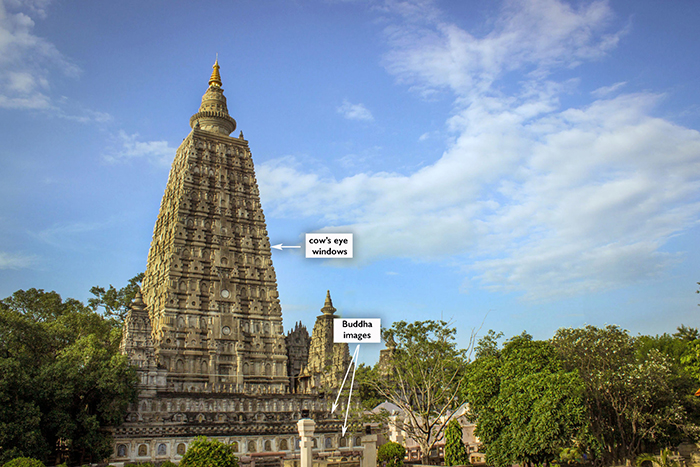
- Buddhism: Bodh Gaya (where Buddha got enlightenment) and Sanchi Stupa. More than 4 million visitors come to Bodh Gaya every year!
- Sikhism: Golden Temple (Amritsar) with Akal Takht, Takht Sri Patna Sahib. Sikhs visit these at least once in life. Guru Nanak also visited many Hindu and Muslim shrines.

Key Words to Remember:
- Pilgrimage (Tīrthayātrā): A special holy journey.
- Shrine: A holy place linked to God or a saint.
- Relic: Something holy like a saint’s belonging.
- Tīrtha: A crossing point from normal life to spiritual life (like a river bank).
3. Pilgrimages – The Big Holy Journeys
Indians have been going on pilgrimages for more than 3,000 years! Even without buses or trains, people walked across the whole country.
Famous Examples:
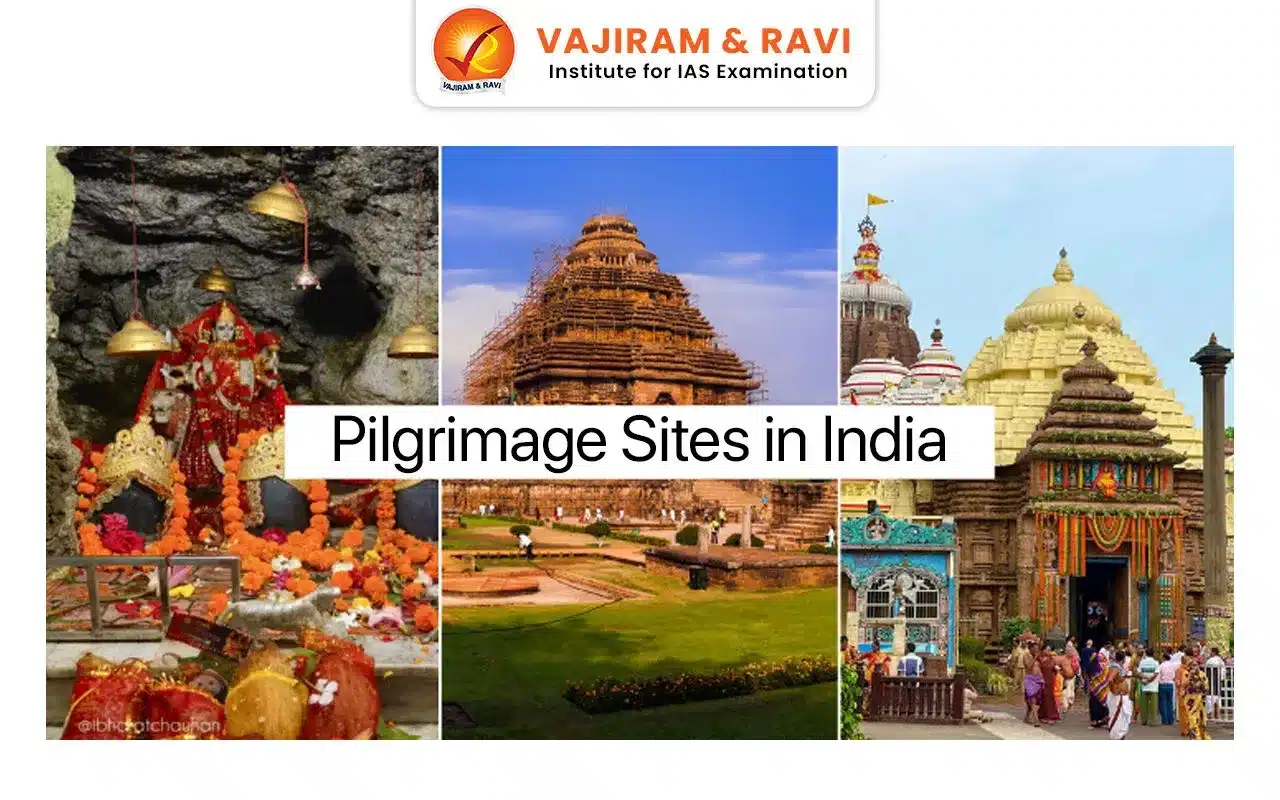
- From snowy Himalayas (Badrinath, Kedarnath, Amarnath) to Kanyakumari in the south.
- Pandharpur Wari (Maharashtra): 800-year-old tradition. Pilgrims walk 21 days in big groups to Vithoba temple.
- Sabarimala (Kerala): Over 10 million devotees visit every year. The tough trek through hills reminds us of life’s challenges.
Jawaharlal Nehru’s Words: "What has drawn our people from the south to the north... It is the feeling of one country and one culture."
Let’s Explore Activity (Do this yourself!) Imagine a group walking from Rameswaram (South) to Haridwar (North). What languages would they hear? How would they talk? What food would they eat? (They carried their own atta, ghee, etc.)
4. More Sacred Sites – Nature is Holy Too!
Hinduism, folk, and tribal traditions see Nature itself as God.
- Mountains, rivers, trees, animals, and even stones are worshipped.
- Rivers are called Devī (goddesses).
- Whole Earth is Bhūdevī (Mother Earth).
Real Examples:
- Niyam Dongar hill (Jharkhand) – sacred to Dongria Khond tribe. No cutting trees allowed!
- Sacred mountains, lakes, and hot springs in Sikkim (protected by government).
- Toda tribe (Nilgiris) – many peaks, Shola forests, and trees are sacred.
Vishnu as Boar saving Mother Earth (picture from Belur temple, Karnataka).
5. Sacred Geography – The Map of Holy Places
Look at the map of India – sacred places are everywhere and connected!
- Char Dham Yatra: 4 holy sites in 4 corners of India (north, south, east, west).
- 12 Jyotirlingas: Special Shiva temples across India.
- 51 Shakti Peethas: Places where parts of Goddess Sati fell (story of Shiva and Sati).
Story Behind Shakti Peethas: The whole land becomes the body of the Divine Mother!
This criss-crossing makes the entire land of India sacred. Pilgrims travel north-south and east-west and feel “We are one!”
Let’s Explore: Trace the map of tīrthas and see how they cover the whole country.
6. Sacred Ecology – Protecting Nature
Tīrthas are usually on river banks, forests, or mountains. This helps protect Nature because we see it as holy.
Rivers:
- Worshipped since Vedic times (Rigveda has a hymn to 19 rivers).
- Special prayer: “Gange cha Yamune chaiva...” (invites 7 holy rivers into any water).
- Kumbh Mela at Prayagraj (Ganga + Yamuna + Saraswati): Happens every 6 years. In 2025, 660 million people came! UNESCO calls it world heritage.
Mountains & Forests:
- Temples on hilltops (Vaishno Devi, Tirupati, Kailash). The climb is like reaching God.
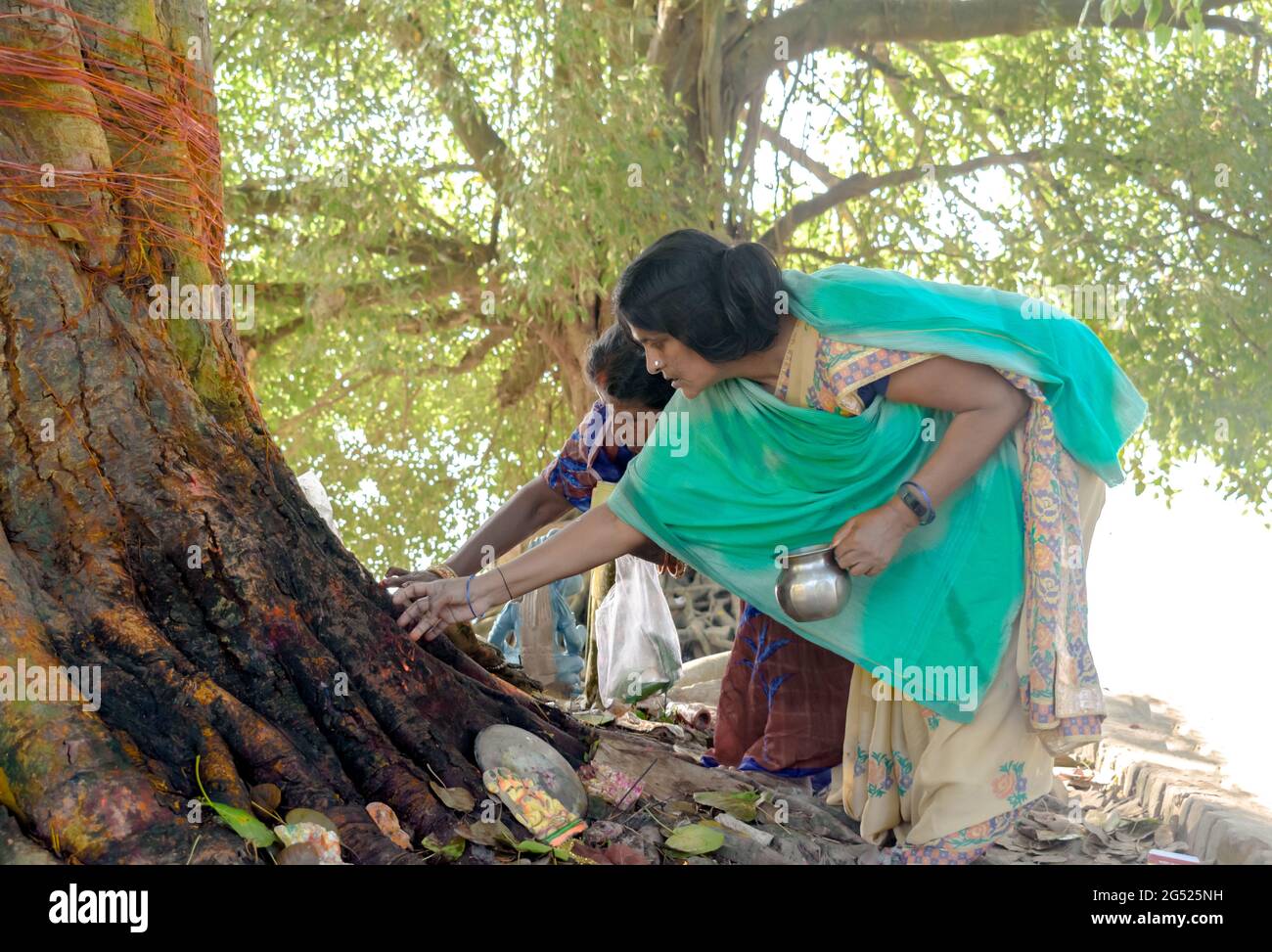
- Peepal Tree (Ficus religiosa): Sacred to Hindus, Buddhists, Jains, Sikhs. Even in Indus Valley seal! Leaves and bark have medicine.
Sacred Groves (protected forests):
- Called kāvu (Malayalam), devare kādu (Kannada), dev van (Hindi), sarnā (Jharkhand), etc.
- Home to rare plants, animals, birds, and bats (they help pollination).
- Sadly, many are shrinking because of farming and factories.
Think About It: Sacred places also help economy – pilgrims buy things, traders come, local jobs increase.
7. Pilgrimage + Trade = Cultural Unity
Pilgrims and traders used the same roads (Uttarapatha and Dakshinapatha).
- They shared goods (spices, diamonds, cotton).
- They shared stories, food, ideas, and beliefs.
- This made India culturally ONE big family.
Activity: Trace ancient trade routes on transparent paper and put over the tīrtha map. You will see they overlap perfectly!
8. Sacred Geography Beyond India
Not only India – ancient Greece, Native Americans, and Maori people (New Zealand) also see mountains and nature as sacred. In New Zealand, a mountain even got human rights in law!
9. Restoring and Conserving the Sacred (Today’s Challenge)
Many sacred rivers (Yamuna, Kaveri) and places are now polluted. Whose job is it? Ours! The Constitution says we must protect our heritage.
David Suzuki’s Powerful Message (Read and Discuss): “The way we see the world shapes the way we treat it. If a mountain is a deity... then we will treat each other with greater respect.”
Before We Move On – Quick Summary (Revise in 2 minutes!)
- All religions have sacred places.
- Pilgrimages connect India’s geography and people.
- Nature (rivers, trees, groves) is holy → protects environment.
- Sacred sites helped trade and cultural unity.
- We must conserve them today!
Questions and Activities (From the Book – Practice These!)
- Discuss David Suzuki’s statement in groups. What does it mean for air, water, land?
- List sacred sites in your region. Why are they sacred? Write a 150-word essay (talk to elders!).
- Why are rivers, mountains, forests sacred? How do they help us?
- Why do people visit tīrthas?
- How did pilgrimage routes help trade? Do sacred sites help local economy?
- How do sacred places influence local culture?
- Choose any two sacred sites and make a small project on their importance.
- What is the two-fold importance of a tīrthayātrā (pilgrimage)?
Exam Tips for You:
- Always draw a small map of Char Dham or Jyotirlingas.
- Remember examples like Kumbh Mela, Peepal tree, Sacred groves.
- Link everything to “Unity in Diversity” and “One India”.
You now have the complete chapter in easy language! Revise with these notes, draw pictures, and discuss with friends. India’s land is sacred because of our beliefs – let’s keep it clean and beautiful! 🌍🙏