Chapter 6: The State, the Government, and You
Class 7 SST – Exploring Society: India and Beyond – Part II (New Book 2026-27)Hello students! This chapter is all about understanding how our country runs. It explains the big difference between "State" and "Government", how India is a Democratic Republic, the three main parts of government (organs), and the three levels at which government works (Union, State, and Local). It also shows your role as a citizen – because you are the most important part!
The chapter uses simple examples (like comparing the State to your school) so you can easily understand real-life politics and governance. Let's break it down step by step, just like the NCERT book does. We'll use easy language, key points, examples, and some cool graphics/photos to make it fun and clear.
Big Questions of the Chapter (As in the Book)
- What is the difference between a State and a Government?
- How is India a Democratic Republic?
- What are the three organs of government and what do they do?
- Why does India have three levels of government (Central, State, Local)?
- What is your role (as a citizen) in making the government work well?
1. What is a State?
A State (or nation) is like a big political family. It is a permanent organisation that has the power to govern (rule) a fixed area and its people.
Four important parts (or features) of a State (Remember these – they are super important!):
- People → The citizens who live in the country (you and me!).
- Land → A fixed territory with clear borders (India's map).
- Government → The system that runs the country (more on this next).
- Sovereignty → Full independence – the State can make its own laws and decisions without any outside control (no other country can boss India around).
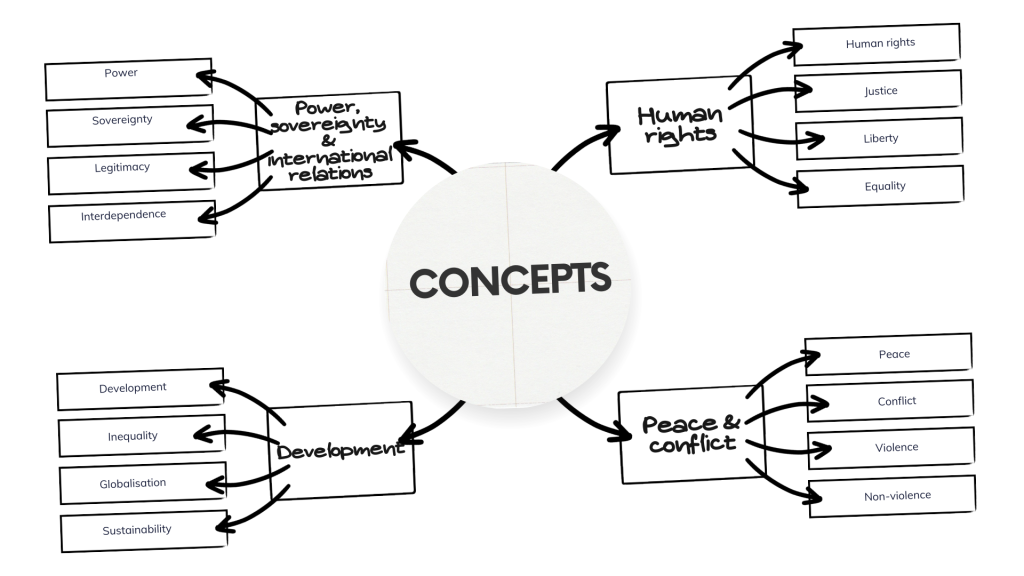
Fig. 6.3 (from the book): Shows these four parts of the State in a simple diagram – people, land, government, and sovereignty as the four pillars.
Note from the book: In India, the word "State" can also mean smaller units like "State of Maharashtra" or "State of Kerala". But in this chapter, "State" mostly means the whole country (India).
Why is this important? Without these four things, there is no proper country!
2. What is a Government?
The Government is only one part of the State. It is the group of people (leaders, ministers, officials) who actually run the daily work of the State.
What does the Government do?
- Makes laws
- Enforces (implements) laws
- Resolves disputes (solves problems between people)
Key Point: The Government can change after elections (new leaders come), but the State remains the same forever.
Simple Analogy from the Book (Super easy to remember!): Think of the State as your School. The Government is like the Principal and Teachers. Principals and teachers may change every few years, but the school building, rules, and students stay the same.
Why do people mix up "State" and "Government"? Because we mostly see and interact with the Government every day (like when we get Aadhaar, go to hospital, or pay taxes). So we often say "the Government did this" or "the State decided that" – they are used interchangeably in daily talk, but they are different.

Fig. 6.5 (from the book): Aerial view of the Parliament of India (in New Delhi) – this is where our Central Government makes important laws.
3. Democracy and Republic
- Democracy: Rule by the people. People elect their leaders through voting (one person, one vote).
- Republic: No king or queen. The head of the State (President) is elected by the people, not born into power.
India is both – a Democratic Republic! We have free and fair elections, and our President is elected (not a hereditary king/queen). This protects everyone's rights.
Why protection of rights is important (as per the book): Fundamental Rights (in our Constitution) ensure equality, freedom, and justice for all – no one is above the law.
4. Three Organs of Government (The Three Pillars)
Every government has three main organs that work together but keep a check on each other (like friends who correct one another). This is called Separation of Powers.
| Organ | What it does | Example in India |
|---|---|---|
| Legislature | Makes laws | Parliament (Lok Sabha + Rajya Sabha) |
| Executive | Implements laws & makes policies | President, Prime Minister, Ministers, IAS officers |
| Judiciary | Interprets laws & delivers justice | Supreme Court, High Courts, District Courts |
Fig. 6.2 (from the book): A simple diagram showing Legislature, Executive, and Judiciary with their roles (making laws, carrying out laws, ensuring laws are followed).

These three organs balance each other so no one becomes too powerful – this is the beauty of our system!
5. Three Levels (Tiers) of Government – Decentralisation
India is a huge country, so one government in Delhi cannot do everything. That's why power is shared at three levels (called Federal Structure or Decentralisation).
- Union (Central) Government – Handles national matters (defence, foreign policy, railways, currency).
- State Government – Handles state matters (education, health, agriculture, police).
- Local Government – Closest to you!
- Rural: Panchayati Raj (Gram Panchayat → Block → District)
- Urban: Municipal Corporations / Nagar Palikas
Why decentralisation? It brings government closer to the people, solves local problems faster, and gives everyone a voice.
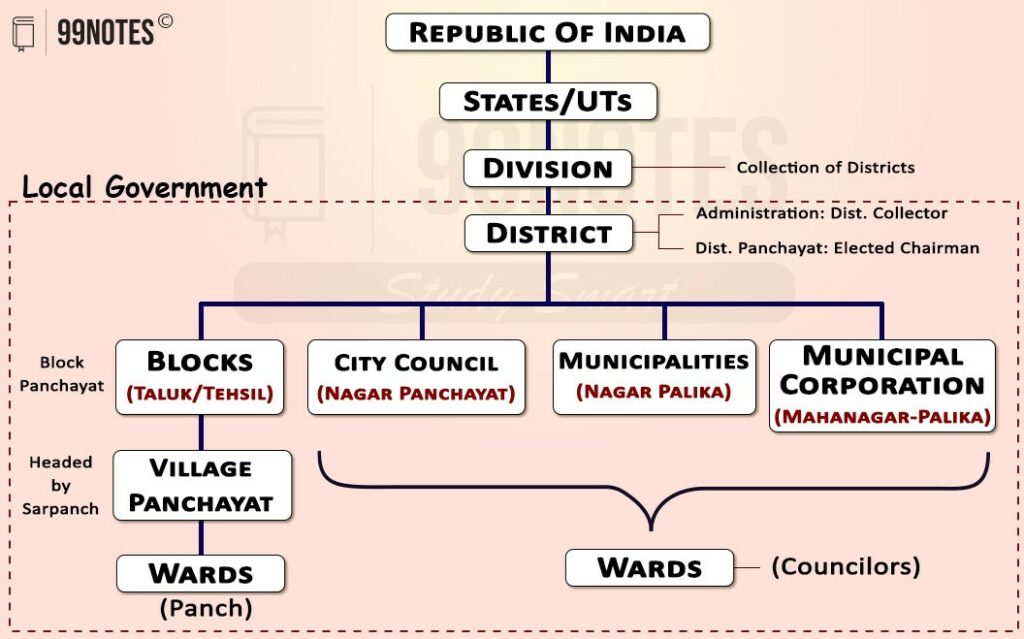
Fig. (from the book): Clear diagram showing the three tiers – Union at the top, then State, then Local (Panchayat/Municipality).
6. The Government and You – Your Role as a Citizen!
The Government works for you and with you. Your duties:
- Vote wisely in elections
- Follow laws
- Pay taxes
- Help in local issues (like cleanliness drives, reporting problems)
- Stay informed and raise your voice peacefully
Remember: You are not just a student – you are a future voter and citizen who can make India better!
Quick Revision Summary (A-Z Key Points)
- State = Permanent (People + Land + Government + Sovereignty)
- Government = Changes after elections; runs the State
- India = Democratic Republic
- Three Organs: Legislature (makes laws), Executive (implements), Judiciary (justice)
- Three Levels: Union → State → Local (Panchayat/Municipality)
- You = The real boss – vote, participate, and hold government accountable!
Activities You Can Do (As Suggested in the Book)
- Draw the four parts of the State and label them.
- Make a chart comparing State vs Government.
- Visit your local Panchayat office or read about your MLA/MP.
- Discuss in class: "How does the government help you in daily life?"
This chapter teaches us that good governance happens when citizens and government work together. You are the future of India – understand this chapter well, and you will become a responsible citizen!
Study these notes, draw the diagrams yourself, and revise the tables – you'll score full marks easily. All the best! 🇮🇳
(Images used are real examples matching the book's figures for better understanding.)