Class 7 SST Chapter 5: The Rise of Empires
Book: Exploring Society: India and Beyond (New NCERT 2026-27)
Easy-to-Remember Notes in Simple Words Hey student! Imagine you have a time machine called “Itihāsa”. Two kids named Bhavisha and Dhruv use it to visit ancient Pataliputra (today’s Patna). They meet a girl named Ira whose father makes swords for the king’s army. They see huge walls, a moat (water ditch for safety), soldiers on elephants, busy markets with silk from China and spices from the south, and acrobats entertaining people. This story shows us how big and powerful an empire was! Let’s learn everything step by step, super easy, like a story. I have added some real photos and graphics from the NCERT book style so you can “see” it clearly. No tough words – only simple ones you can remember forever!
1. What is an Empire? (Super Simple Definition)
- A kingdom = one king rules one area (like one city or small land).
- An empire = one super-powerful ruler (called emperor or samrāj) rules many kingdoms together. Smaller kings still rule their own places but pay tribute (money, gold, grain, elephants, etc.) to the big emperor. They say “yes sir” to him.
- Emperor sits in a big capital city (like Pataliputra) and controls everything.
- Sanskrit names for emperor: samrāj (lord of all), adhirāja (overlord), rājādhirāja (king of kings).
Easy memory tip: Empire = Big boss + many small bosses who pay tax and obey. Kingdom = Only one boss.
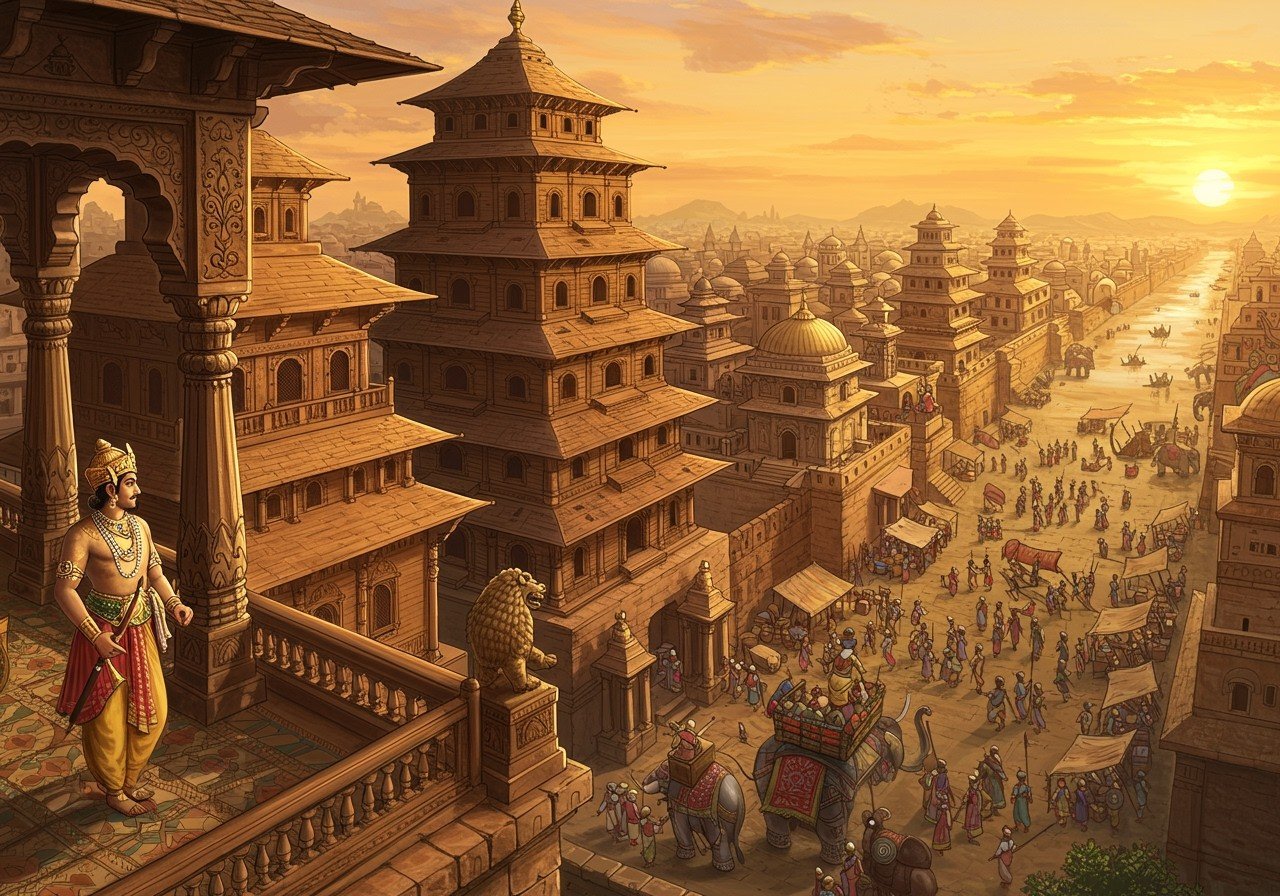
Photo 1: Artistic view of ancient Pataliputra – the grand capital with palaces, markets, elephants and busy streets (just like Ira showed Bhavisha and Dhruv).
2. Main Features of an Empire (6 Easy Points – Remember as “Army-Admin-Law-Resources-Art-Roads”)
- Strong Army – To win new lands, control old ones, and protect borders.
- Good Administration – Officers collect taxes, keep law and order, run the empire.
- Laws + Coins + Weights – Same rules and money everywhere so trade is easy.
- Control Resources – Mines, forests, farms, rivers – all under emperor for money and power.
- Art, Schools, Religions – Emperor supports temples, books, learning.
- Good Roads & Communication – For army, trade and sending messages fast.
Memory tip: Think of empire as a big family house – emperor is father, smaller kings are uncles who pay pocket money and follow house rules.
3. How Did Empires Rise? (Two Main Ways – War + Smart Business)
- Way 1: War – Strong king attacks weak neighbours, wins, makes them pay tribute. Builds forts on borders.
- Way 2: Trade & Money – Control rivers and roads (trade routes) → more goods → more tax → richer army → bigger empire.
Guilds (śhrenīs) – Groups of traders, craftsmen, farmers who worked together like a team. They made rules themselves. King did not interfere. This helped trade grow a lot. Trade routes (two big ones):
- Uttarapatha (North road) – From north to northwest.
- Dakṣhiṇapatha (South road) – To south India.

Photo 2: Map of ancient trade routes – black line is Uttarapatha, red is Dakshinapatha. Rivers and cities helped traders move goods easily.
Let’s Explore (Book Activity): Look at the map – rivers helped boats, mountains gave timber and elephants.
4. Rise of Magadha (First Super Kingdom → Empire)
- Time: 6th to 4th century BCE (about 600–300 BCE).
- Magadha (south Bihar + nearby) was lucky:
- Fertile Ganga plains → lots of food.
- Forests → timber + elephants for army.
- Iron mines → strong ploughs (more crops) + sharp weapons.
- Rivers (Ganga + Son) → easy transport and trade.
- King Ajātaśhatru made it strong.
- Later, Nanda dynasty (Mahāpadma Nanda) united many kingdoms, had huge army and coins. But last Nanda king was cruel → people unhappy.
Photo from book style: Punch-marked coin of Nanda king (silver coin with symbols – used as money).
5. Alexander the Greek Comes to India (Short Visit – Big Effect)
- 327–325 BCE: Alexander (from Greece) defeated King Porus in Punjab.
- Porus said, “Treat me like a king!” → Alexander let him rule as satrap (governor).
- Alexander’s soldiers got tired and went back. He died soon after.
- Effect: Opened doors for Greek-Indian friendship and trade. Some Greek coins and stories came to India.
Easy memory: Alexander came, fought, left – but friendship started.
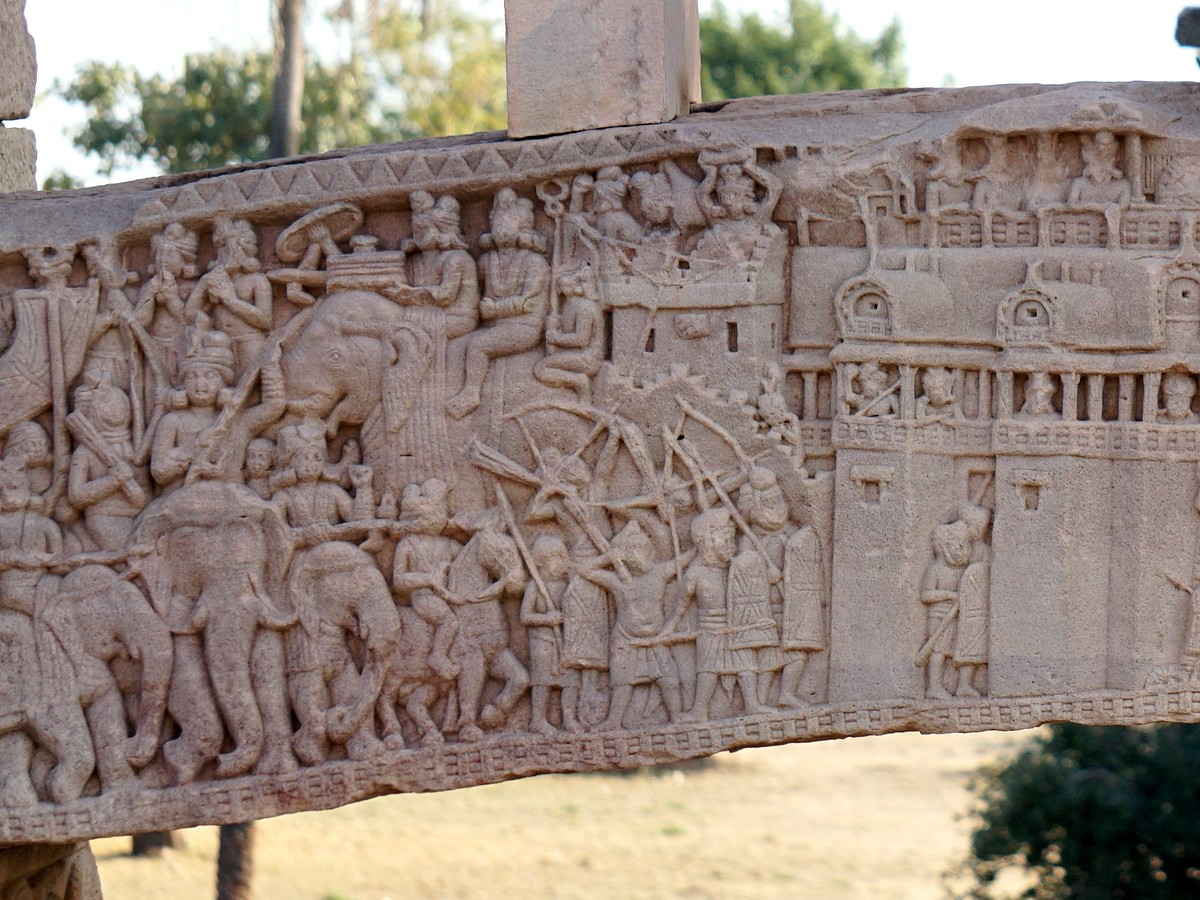
Photo 3: Stone carving from Sanchi Stupa showing ancient battle with elephants and soldiers (like Mauryan or Nanda times).
6. The Mighty Mauryan Empire (India’s First Big Empire!)
- Founder: Chandragupta Maurya (321 BCE).
- Helped by smart teacher Kauṭilya (Chanakya).
- Kauṭilya wrote Arthaśhāstra – book on how to run kingdom like a business + smart rules.
- Saptānga (7 parts of a strong kingdom):
- King
- Minister
- Country (land & people)
- Fort
- Treasury (money)
- Army
- Ally (friend king)
- Chandragupta defeated Greek governors left by Alexander and made empire from north to Deccan.
- Capital: Pataliputra. Greek visitor Megasthenes wrote about it (book Indika).
Kauṭilya’s golden line (easy to remember): “King’s happiness = People’s happiness. King must care for people first.”
7. King Ashoka – The King Who Chose Peace ❤️
- Grandson of Chandragupta. Ruled 268–232 BCE.
- At first, he was a fighter. He won Kalinga War (Odisha) but saw lakhs of people die.
- He felt very sad → gave up war → followed Buddha’s teachings (non-violence, kindness).
- Sent messengers to Sri Lanka, Thailand, etc. to spread peace.
- Edicts (messages on rocks and pillars in Prakrit + Brahmi script):
- Called himself “Devanampiya Piyadasi” = Beloved of Gods, Kind to all.
- Built roads, wells, rest houses, planted trees.
- Medical help for people and animals.
- Asked everyone to respect all religions.
- Officials must be fair and kind.
Memory tip for Ashoka: Kalinga war → tears → changed to “Dhamma” (good duty, kindness, truth). Edicts = WhatsApp messages of ancient times on stones!

Photo 4: Ashoka’s rock edict (Brahmi script) – his messages of peace carved on rock.
Photo 5: Sarnath Lion Capital (top of Ashoka’s pillar) – 4 lions + wheel. Today it is India’s National Emblem!
8. Life in Mauryan Times (Daily Life – Easy Picture)
- Cities: Pataliputra had wooden palaces, straight streets, fire safety pots, two-storey houses.
- Village life: Farmers grew two crops a year (good rain). Granaries stored food for bad times.
- Jobs: Blacksmiths, potters, carpenters, traders.
- Art: Beautiful pillars, stupas, terracotta toys and statues.
- Clothes: Cotton lower garment + upper shawl. Some wore stylish leather shoes.
Don’t Miss: Sohagaura copper plate – earliest record of government granary for famine help.
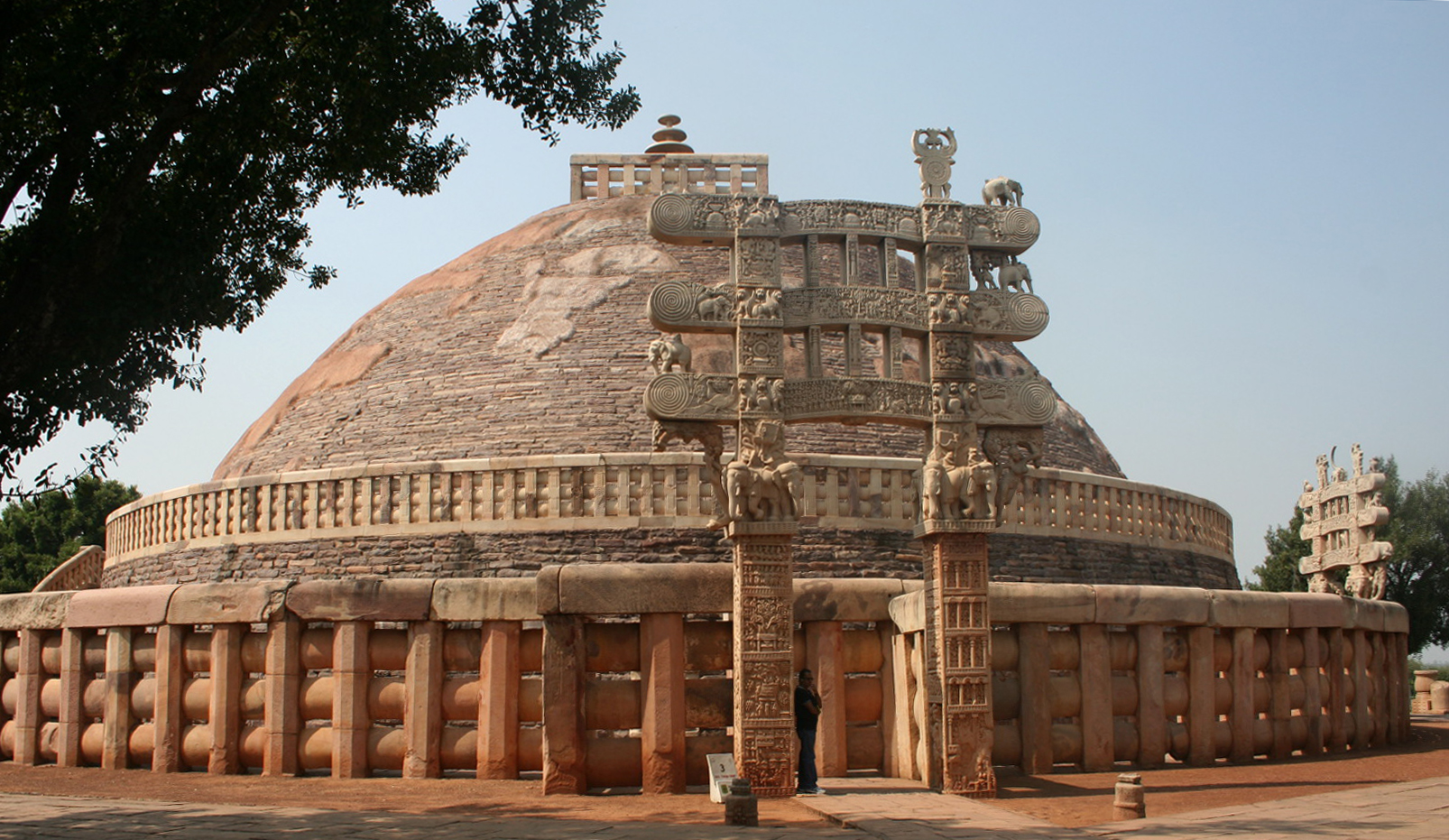
Photo 6: Great Stupa at Sanchi (built by Ashoka) – huge dome for Buddha’s relics. People walk around it praying.
9. Why Empires Become Weak and Fall?
- Too big → hard to control far places.
- Weak king after strong one → local kings stop paying tribute.
- Too many wars or drought → no money.
- People unhappy → revolt. Empires bring unity but also use force, so they don’t last forever.
Mauryan end: After Ashoka, empire slowly broke into small kingdoms again (around 185 BCE).
Quick Summary Points (Revise in 2 Minutes)
- Empire = Many kingdoms under one emperor.
- Rise because of army + trade + resources (Magadha had all).
- Mauryas = First big empire (Chandragupta + Kautilya + Ashoka).
- Ashoka changed from war to peace and dhamma.
- Left behind coins, edicts, pillars, stupas, good roads.
- Empires are strong but fragile.
Important Questions (Book Style – Answer These Yourself)
- Difference between empire and kingdom?
- Why did Magadha become powerful?
- What did Kauṭilya teach in Arthaśhāstra?
- Why did Ashoka change after Kalinga?
- What do Ashoka’s edicts tell us?
You now have full A-Z notes – read once, revise with pictures, and you will remember everything easily! Draw the Saptānga circle or Ashoka’s lion capital in your notebook for extra marks. If you want mind maps or more activities, just ask. Study smart! 🚀