Class 7 SST Chapter 4: New Beginnings – Cities and States
Easy-to-Remember Notes from Exploring Society: India and Beyond (New Book 2026-27) Simple Words + Fun Tips to Remember!
Hey student! Imagine after the big Indus Valley cities disappeared, India got a “second chance” to build new cities. This chapter is all about that exciting new start around 600 BCE (1st millennium BCE). We call it the Second Urbanisation. No big words – just clear stories, bullets, tables, and pictures to help you remember everything forever. Read once, revise with pictures, and you’ll score full marks!
1. What is “Second Urbanisation”? (Super Simple Explanation)
- First Urbanisation = Indus Valley (Harappa, Mohenjo-Daro) – ended around 1900 BCE.
- After that, for a few hundred years, life became smaller (villages only).
- Then, around 600 BCE, new big cities and towns popped up again – especially in the fertile Ganga plains, parts of Indus area, and other places.
- This fresh city-life phase is called Second Urbanisation.
- It lasted long and shaped today’s India!
Memory Tip: “First = Indus down. Second = Ganga up!” (Ganga plains = main area).

Picture above: Colourful map of Mahajanapadas (the big states) from the chapter – see how they spread across North India!
2. Why were Janapadas and Mahajanapadas Important?
- Janapadas = Small areas ruled by people (like tiny kingdoms or republics).
- Mahajanapadas = Bigger and stronger states made by joining many Janapadas.
- Why important?
- Better farming → more food → more people.
- Trade grew (buy-sell between cities).
- Strong governments brought peace and order.
- New cities, crafts, and jobs appeared.
- Result: Economy boomed and urban life returned!
Memory Tip: Janapada = “Jana” (people) + Pada (place) → small people’s place. Mahajanapada = “Maha” (big) version of that.
3. What Kind of Government Did They Have? (Two Types)
- Most were Monarchies (one king ruled).
- Some were Ganas or Sanghas (republics) → early democracy!
- No single king.
- Assembly of people (like a big meeting) chose leaders and took decisions.
- This was one of the world’s first republics!
Memory Tip: Monarchy = “Mono” (one king). Gana/Sangha = “Group rules” like today’s parliament.
4. The 4 Most Powerful Mahajanapadas (Easy List + Modern Cities)
Here are the super-power states:
| Mahajanapada | Capital | Modern Place | Fun Fact |
|---|---|---|---|
| Magadha | Rajagriha (then Pataliputra) | Rajgir → Patna (Bihar) | Became strongest; later Maurya capital |
| Kosala | Shravasti | Near Bahraich (Uttar Pradesh) | Important for Buddha |
| Vatsa | Kaushambi | Near Prayagraj (Uttar Pradesh) | Busy trading city |
| Avanti | Ujjayini | Ujjain (Madhya Pradesh) | Still famous for temples |
Memory Tip: Remember “M-K-V-A” like “My King Very Awesome” → Magadha, Kosala, Vatsa, Avanti.
5. First Urbanisation vs Second Urbanisation (Table to Mug Up Fast)
The book gives this cool comparison (Page 70):
| Feature | First Urbanisation (Indus) | Second Urbanisation |
|---|---|---|
| Ganga Plains | No | Yes |
| Monasteries | No | Yes |
| Literature | No | Yes |
| Trade | Yes | Yes |
| Warfare | Yes | Yes |
| Copper/Bronze | Yes | Yes |
| Iron | No | Yes (Big change!) |
Memory Tip: Second one has extra “Ganga + Monasteries + Literature + Iron”. Think “GMLI” = Great Modern Life with Iron!
6. Life in These New Complex Societies
- Society became bigger and more complicated.
- People divided into groups by occupation (job) for better work.
- Examples of professions:
- Farmers (grew more rice, wheat with iron tools)
- Traders & merchants
- Soldiers
- Priests
- Scribes (writers who kept records)
- Metalworkers, stone masons, craftsmen
- This division helped cities run smoothly.
Think About It (from book): Inequalities exist (rich-poor, caste, gender, etc.). Equality is important because everyone deserves respect and a chance to grow. Good initiatives like scholarships help reduce gaps.
Memory Tip: Complex society = “Different jobs for different needs” like a big team in a football match.
7. Why Iron Was a Game-Changer (Iron Metallurgy)
- Iron tools (strong ploughs, axes) cleared forests easily.
- More farming → surplus food → cities could grow.
- Better weapons and carts → trade and wars easier.
- Result: Boom in cities and crafts!
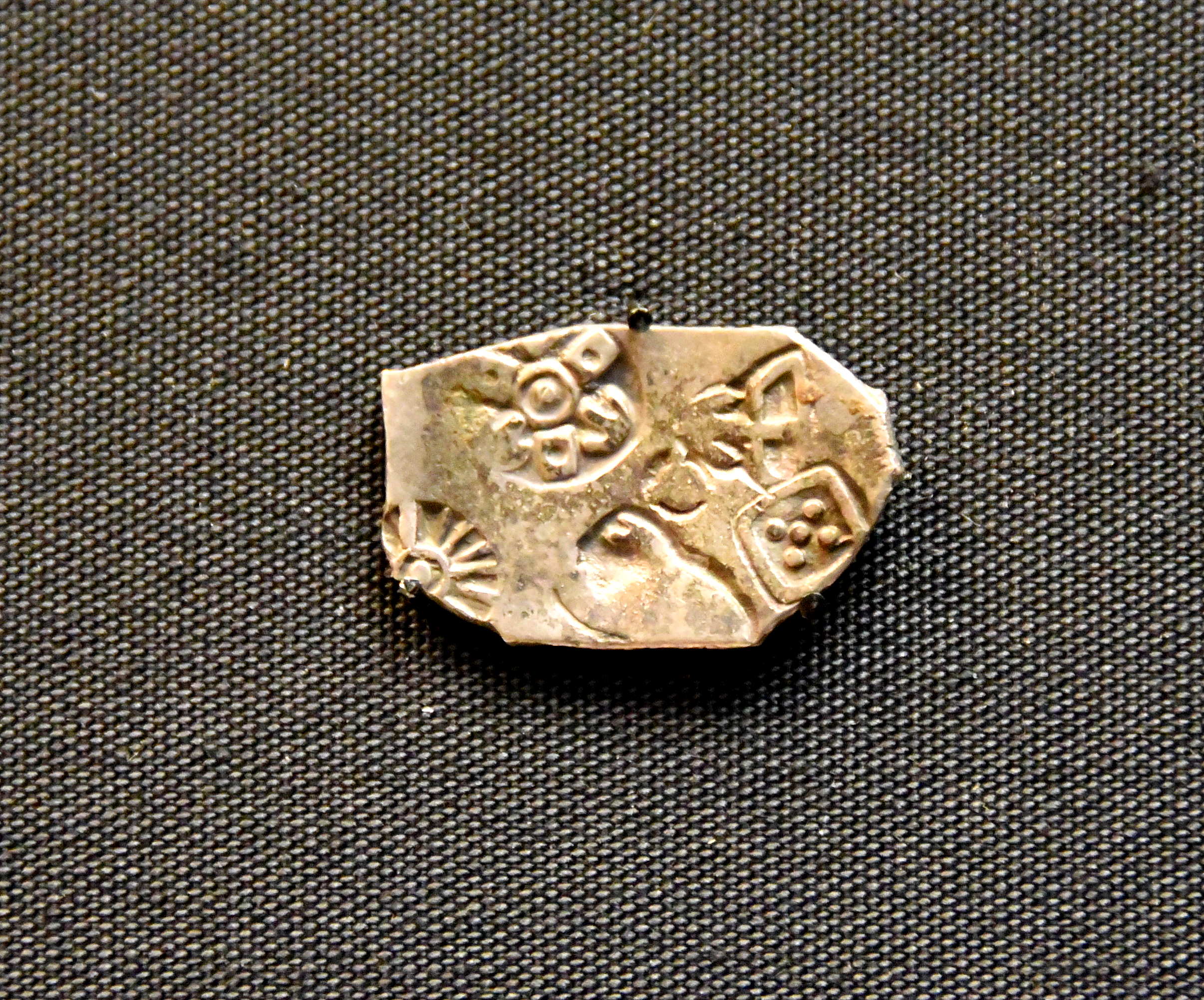
Picture below: Ancient punch-marked coins used in Mahajanapadas for trade.

8. How Do We Know About This Period? (Sources)
- Literary sources: Old books, Buddhist & Jain texts.
- Archaeology: Digging at Rajgir, Ujjain → bricks, pottery, tools.
- Coins: Punch-marked coins (show kings and economy).
- Inscriptions: Writings on stones.
Memory Tip: Sources = “LAB + Coins” (Literature, Archaeology, Books + Coins).
9. Kautilya’s Smart Ideas (from Arthashastra)
Kautilya (Chanakya) gave advice for good kingdoms:
- Strong forts and borders.
- Store food for bad times.
- Beautiful land with farms, mines, forests.
- Good roads and rivers for transport.
- Mix of many products so kingdom doesn’t depend on one thing.
Today’s connection: Same ideas – security, self-sufficiency, good infrastructure!
10. Quick Revision Checklist (A-Z Style – All Points Covered!)
- Agriculture improved with iron → more food.
- Big states (Mahajanapadas) rose.
- Cities grew again (Second Urbanisation).
- Democracy started in some ganas.
- Economy boomed with trade & coins.
- Four powerful states: Magadha, Kosala, Vatsa, Avanti.
- Ganga plains = main area.
- History known from texts + digs.
- Iron = superhero metal.
- Janapadas → Mahajanapadas.
- Kautilya’s rules still useful.
- Literature and monasteries appeared.
- Monarchies + Republics both existed.
- New professions for everyone.
- Order in society through groups.
- Pataliputra became capital later.
- Questions in book: Compare maps, fill table.
- Rajagriha old capital of Magadha.
- Second Urbanisation = new beginning!
- Trade & warfare both increased.
- Ujjain = Avanti capital.
- Vatsa at Kaushambi.
- Why divide society? For smooth work.
- Xtra tip: Equality matters!
- You now know the full chapter.
- Zero confusion – revise pictures daily!
Final Pro Tip for Exams: Draw the map of 4 capitals in 2 minutes. Make the comparison table. Tell the story: “Indus fell → Iron came → Janapadas grew → Big states + cities rose!”