Class 7 Science – Curiosity (New NCERT Book 2026-27)
Chapter 6: Adolescence – A Stage of Growth and Change
Easy-to-Remember Detailed Notes
(Original notes based on NCERT book – simple language, bullets, tables, memory tricks for quick revision)1. What is Adolescence? (The Big Picture – Easy Intro)
Life journey has 5 stages: Infancy → Childhood → Adolescence (10–19 years) → Adulthood → Old Age
Adolescence = “Teenage growth explosion”!
- Body grows very fast.
- Prepares for adulthood and reproduction (making babies).
- Changes are physical (visible) + internal (invisible) + emotional.
- Every person’s timing and speed is different – completely normal! Memory Trick: Think “A for Adolescence = Awesome growth + A bit confusing emotions!”
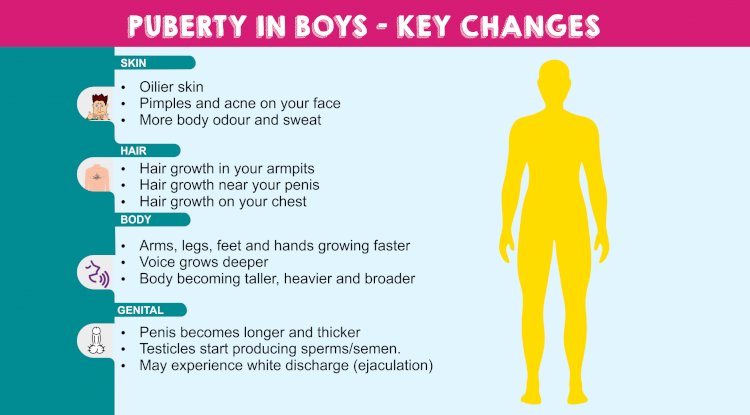
Visual Tip: See the picture above – it shows key body changes in boys (and similar changes happen in girls too).
2. Visible Physical Changes (Section 6.1 – Growing with Age)
Remember as H-V-S-H (Height – Voice – Skin – Hair):
| Change | What Happens | Boys | Girls | Memory Tip |
|---|---|---|---|---|
| Height & Weight | Sudden spurt | Shoulders broader, chest wider | Breasts develop | “Tall & Strong” phase |
| Voice | Voice box grows | Hoarse/cracky voice + Adam’s apple bump in throat | Slight change only | “Adam’s apple = Boy voice crack” |
| Skin | Oil increases | Pimples/acne on face | Same | “Oily skin = Pimples party” |
| Hair | New hair grows | Armpits, pubic area, face (moustache/beard), sometimes chest | Armpits, pubic area | “Hair everywhere – normal!” |
- Secondary Sexual Characteristics: These changes (voice, hair, breasts) help tell boys and girls apart. They are not directly for making babies but signal puberty has started.
- Puberty: The stage when body becomes ready to reproduce (external + internal changes).
Key NCERT Point: Timing of changes differs – some start at 10, some at 15. No two bodies are the same!
3. Internal Changes for Reproduction (Section 6.2)
- Girls: Menstrual cycle (period) starts.
- Happens every 21–35 days (usually 28–30 days).
- Lasts 3–7 days.
- Blood comes from uterus (natural process).
- Some girls feel mild pain in lower tummy.
- Stops naturally around 45–55 years (end of reproductive age).
Memory Trick for Cycle: “28 days = Monthly cycle like a calendar month.”
Breaking Myths (Important!):
- Menstruation is natural and healthy – no scientific reason to isolate girls.
- Talk openly, remove shame.
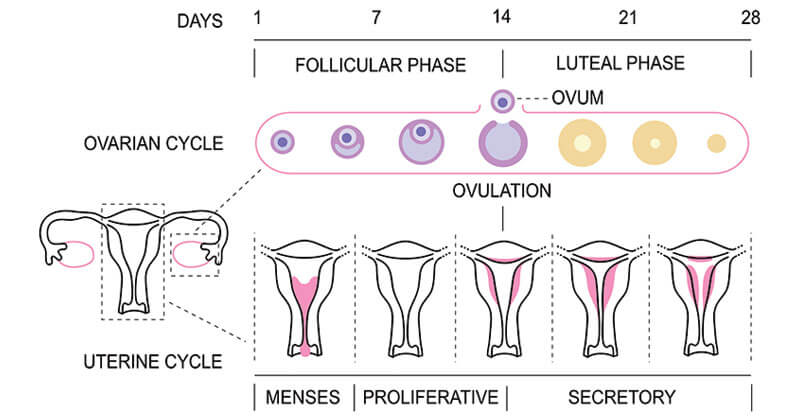
Visual Tip: The picture above shows the simple menstrual cycle diagram – follicular phase, ovulation, etc.
4. Emotional & Behavioural Changes (Section 6.3)
Adolescence = Stronger feelings! Common emotions → Mood swings, sensitivity, excitement, confusion.
Table for Quick Revision (from book Activity 6.2):
| Emotional Change | Possible Behaviour | Positive Way to Handle |
|---|---|---|
| Mood swings | Strong feelings | Music, dance, sports |
| Increased sensitivity | Self-exploration | Creative activities |
Memory Tip: “Emotions high? Channel into sports or art – turn confusion into creativity!”
5. How to Make Adolescence Joyful & Healthy (Section 6.4 – Super Important!)
Follow N-H-P-S-N (Nutrition – Hygiene – Physical activity – Social life – No to harmful stuff)
A. Nutrition (Eat Smart for Growth)
Body needs extra proteins, carbs, fats, calcium, iron, vitamins. Easy Food Chart (fill like book Activity 6.3):
| Food Example | Nutrients | Helps With |
|---|---|---|
| Milk, curd, cheese, paneer, millets | Calcium + Proteins + Fats | Strong bones, growth |
| Spinach, kidney beans, raisins, figs | Iron | Blood formation, energy |
| Eggs, dal, chicken, fish | Proteins | Muscles, strength |
Science & Society Tip: Girls often need extra iron (deficiency → anemia). Eat iron-rich food + vitamin B12 sources. Government schemes help too!
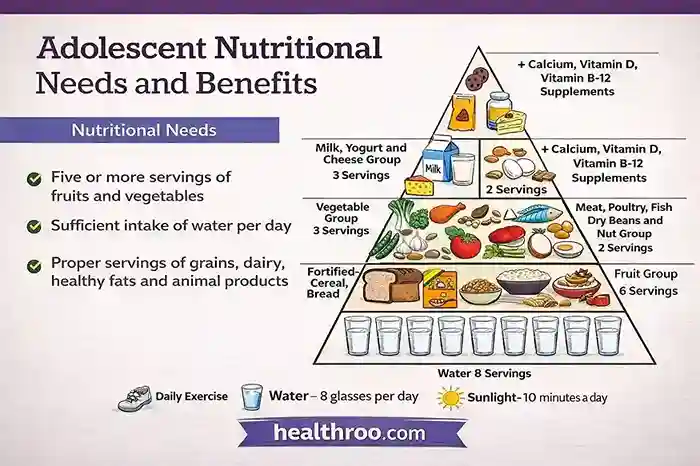
Visual Tip: See the food pyramid above – eat balanced for teen growth!
B. Personal Hygiene (Stay Clean!)
- Wash armpits & pubic area daily → prevents infection.
- Girls during periods: Use sanitary pads (disposable or reusable cloth). Change regularly. Dispose by wrapping in newspaper → dustbin. Prefer biodegradable pads.
- Government helps: Free/low-cost pads in schools (Menstrual Hygiene Scheme, RKSK, Suvidha, state schemes like Shuchi).
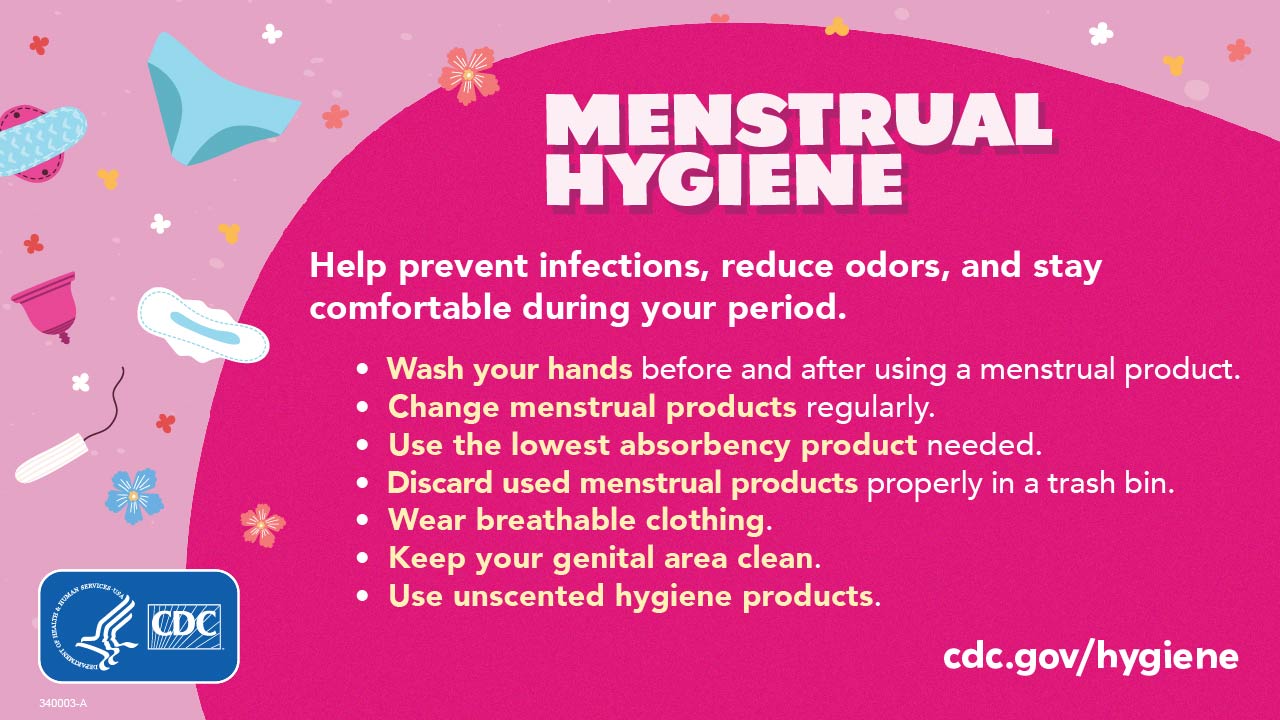
Visual Tip: The hygiene poster above reminds easy rules – wash hands, change pads, stay clean!
C. Physical Activities (Move Your Body!)
- Play games, sports, exercise daily.
- Benefits: Strong muscles, better mood, more stamina, healthy mind.
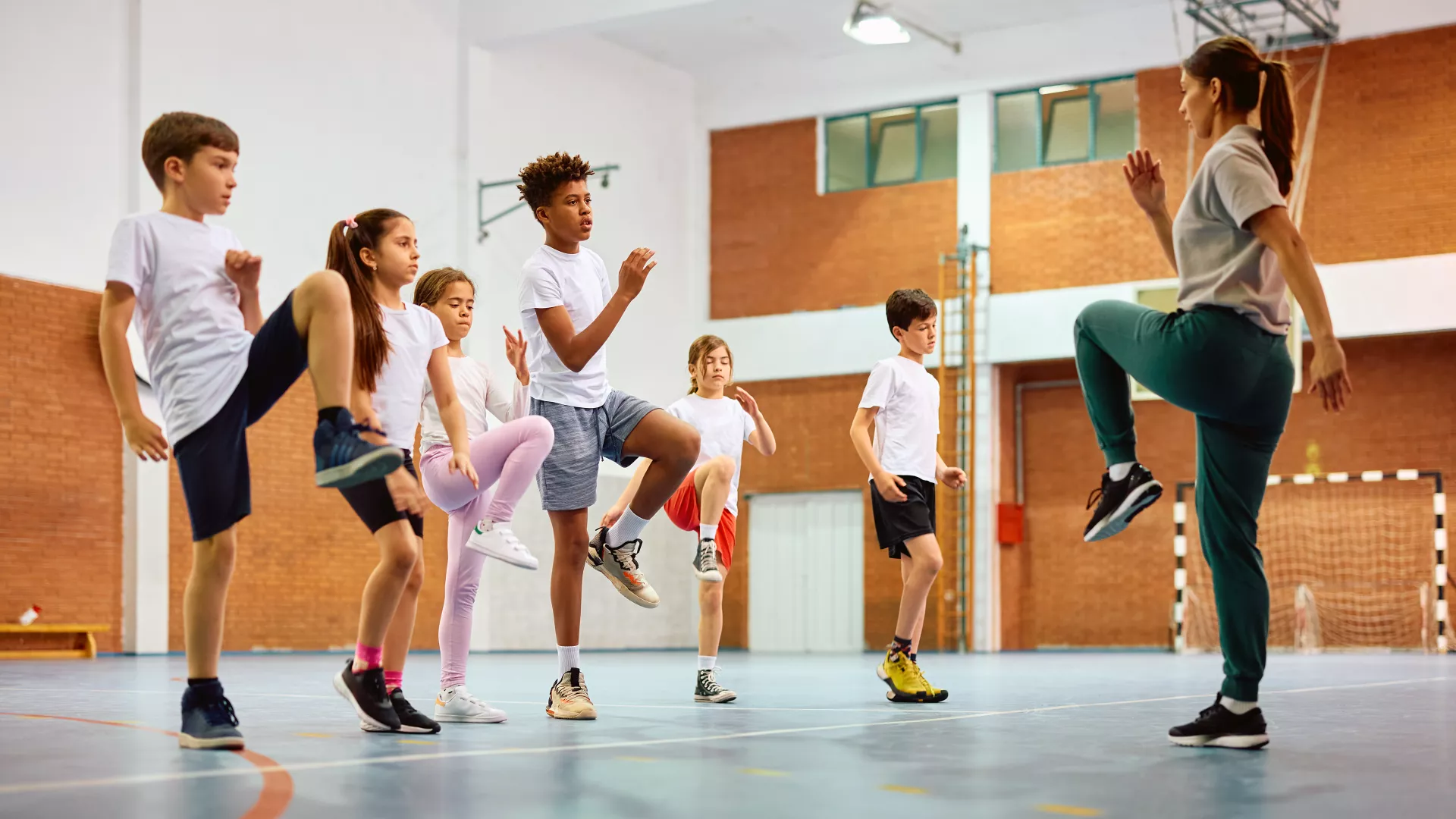
Visual Tip: Kids exercising in the picture – join sports, feel energetic!
D. Balanced Social Life (Be Kind Online & Offline)
- Respect everyone.
- Use social media wisely: Be polite, protect privacy.
- Cyberbullying: Don’t bully or get bullied. Report, take screenshots, talk to parents/teachers.
Dos & Don’ts (from book Activity 6.4):
- Do: Be kind, think before posting, keep personal info private.
- Don’t: Share photos with strangers, forward rumours.
Visual Tip: The cyber-safety poster shows exactly what to do!
E. Say “NO” to Harmful Substances
- Never try tobacco, gutka, cigarettes, alcohol, drugs – even once!
- They are addictive (hard to stop) and damage lungs, brain, health.
- One puff today → big problem tomorrow.
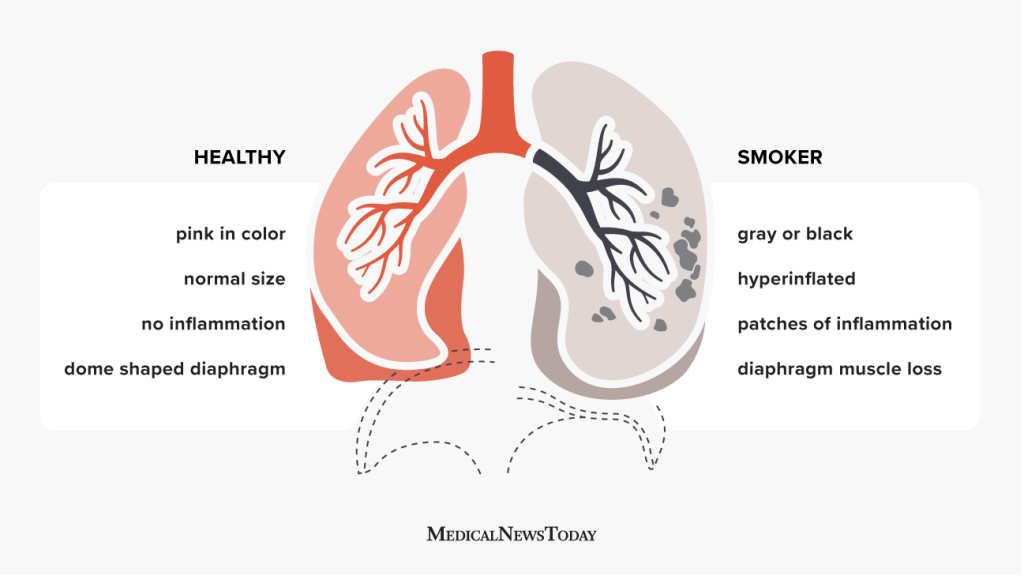
Visual Tip: Healthy pink lungs vs damaged black lungs – clear proof why to say NO!
Quick Revision – In a Nutshell (Memorise These 5 Points)
- Adolescence = 10–19 years of rapid growth + puberty.
- Changes are normal & different for everyone (H-V-S-H).
- Girls: Menstrual cycle is natural – break myths!
- Stay joyful: N-H-P-S-N (Nutrition, Hygiene, Physical activity, Social balance, No harmful stuff).
- Talk to elders if confused – you are not alone!
Activities to Do at Home (for better memory):
- Make your own “Changes Table” like Activity 6.1.
- Fill food-nutrient table with local Chennai foods (idli, sambar, curd rice, spinach poriyal).
- Design posters on “Say NO to drugs” or “Safe social media”.
These notes are complete, detailed, and super easy to remember – just revise the tables and memory tricks daily. You will score full marks and understand your own body better! Stay healthy, stay curious! 🌟