Class 7 Science – Curiosity (New NCERT Book 2026-27) Chapter 5: Changes Around Us – Physical and Chemical
Full Detailed Notes (Easy to Remember Style) Made specially for you – simple language, short points, tables, mnemonics, examples from daily life + activities exactly as in the NCERT book. Everything is original summary from the official NCERT Curiosity textbook (ncert.nic.in). No copy-paste, just easy-to-revise format!
1. What are Changes? (Introduction)
Everything around us keeps changing! Examples from the book:
- Ice cube → water (after 30 minutes)
- Cold water bottle becomes warm
- Rose bud → flower
- Banana gets more brown spots + bad smell
Remember Tip: Changes = anything that looks, smells, feels or tastes different. We notice them with our 5 senses (sight, smell, touch, hearing, taste).
Activity 5.1 (Do at home – very easy!) Fill this table (write your own observations):
| S.No. | Change | What you observe (size/shape/smell/state) |
|---|---|---|
| 1 | Melting ice cubes | Ice becomes liquid water |
| 2 | Chopping vegetables | Pieces become smaller |
| 3 | Boiling water | Bubbles, steam comes out |
| 4 | Making popcorn | Corn becomes fluffy & big |
| 5 | Cutting paper | Small pieces |
| 6 | Beetroot extract in water | Colour changes to pink/red |
| 7 | Burning wood | Ash left, smoke |
| 8 | Drying wet clothes | Water disappears |
| 9 | Making dough balls | Shape changes |
| 10 | Rolling chapati | Flat circle from ball |
| 11 | Your own example | — |
Mnemonic: P-C Test → Ask: “Is a Product (new substance) formed?” → Physical = No, Chemical = Yes.
2. Physical Changes (Section 5.1)
Definition (Super Easy): Only appearance changes (shape, size, state). No new substance is formed. Material remains the same. Often reversible (can go back).
Activity 5.2 (Try now!) A. Fold paper into boat/hat/plane → Unfold → Same paper back! B. Inflate balloon → Let air out → Same balloon back. Prick with pin → Cannot get back (but still physical). C. Crush chalk → Powder → Cannot easily get chalk back, but no new thing formed.
Key Point to Remember: Paper, rubber, chalk – same stuff, only shape/size changed. Water changes state (ice ↔ water ↔ steam) – classic physical change (from Class 6).
Easy Examples (Daily Life):
- Melting ice → water
- Boiling water → steam
- Folding clothes/paper
- Cutting vegetables (shape only)
- Dissolving sugar in water (can evaporate back)
Remember Mnemonic for Physical: “Physical = Properties change, Product same, Possible to reverse (mostly).”

Graphic: Paper folding activity – Shows how paper becomes different shapes but is still paper (Physical change).
:max_bytes(150000):strip_icc()/physical-and-chemical-changes-examples-608338_FINAL-2-69bf88aa2f774afa8bba8df2ec203e70.png)
Graphic: Physical Changes examples – Melting ice, shredding paper, chopping wood – all no new substance.
3. Chemical Changes (Section 5.2)
Definition (Super Easy): New substance(s) formed. Appearance + properties totally change. Usually irreversible. Called Chemical Reaction.
Activity 5.3 (Lime Water Test – Must Do!)
- Glass A: Tap water + blow air (exhale) → Only bubbles, no change.
- Glass B: Lime water + blow air → Turns milky + white powder settles. Why? Your exhaled air has CO₂ → reacts with lime water (calcium hydroxide) → new substance calcium carbonate (white & milky).
Chemical Equation (Easy to remember): Calcium hydroxide + Carbon dioxide → Calcium carbonate + Water (Lime water) (Insoluble white powder)
Activity 5.4 (Kitchen Magic – Vinegar + Baking Soda)
- Vinegar/lemon juice + baking soda → Fizzing + bubbles (CO₂ gas).
- Pass gas into lime water → Turns milky again!
- New substance = CO₂ gas. Equation: Vinegar + Baking soda → Carbon dioxide + Other substances
Remember Tip: Lime water milky = proof of CO₂ (test used everywhere!).

Graphic: Lime water test – Exhaling into lime water turns it milky (classic chemical change).
4. Other Important Chemical Changes (Section 5.3)
5.3.1 Rusting Iron + air (oxygen) + water → New brown substance = Rust (iron oxide). Equation: Iron + Oxygen + Water → Rust Irreversible.
5.3.2 Combustion (Burning) Magnesium ribbon burns → New white powder (magnesium oxide) + heat + light. Equation: Magnesium + Oxygen → Magnesium oxide + Heat + Light (From previous chapter – metals & non-metals).
Other Daily Life Examples (Remember these!):
- Cooking food (raw → cooked – new taste/smell)
- Burning wood/paper
- Digestion of food in stomach
- Rotting banana/fruit
- Fireworks (explosion + colours)
Mnemonic for Chemical: “Chemical = Composition changes, Completely new product, Cannot reverse easily.”
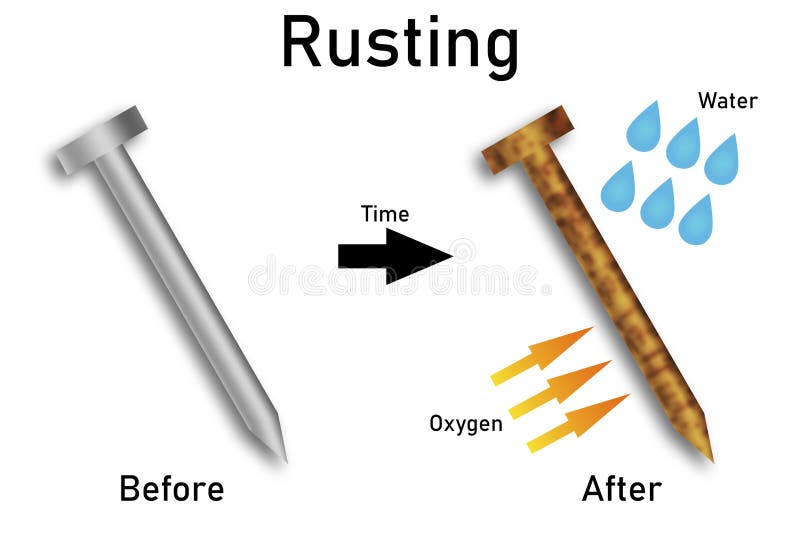
Graphic: Rusting of iron – Shiny nail → rusty brown nail (water + oxygen needed).
![Difference Between Physical Change and Chemical Changes [in Table][](https://www.teachoo.com/static/post/chemical-change-vs-physical-change-01.jpg)
Graphic: Physical vs Chemical comparison table – Clear examples side-by-side (combustion/rotting vs melting/shredding).
5. Reversible vs Irreversible Changes (Key Concept)
- Reversible: Can go back (mostly physical) → Melting ice, folding paper, boiling → condensing.
- Irreversible: Cannot go back (mostly chemical) → Burning, rusting, cooking chapati, popcorn.
Trick: Some physical changes are irreversible too (crushing chalk, cutting paper). Some chemical are reversible in labs (but not in daily life).
6. Changes in Nature (Weathering & Erosion – Section 5.7)
Weathering: Rocks break down slowly (physical or chemical).
- Physical: Cracking due to heat/cold/water.
- Chemical: Reaction with air/water/acids.
Erosion: Broken rock pieces (sand) are carried away by rivers/wind/rain → sand collects on riverbeds/lakes.
Big Picture: These changes shape mountains, rivers, soil – all around us!
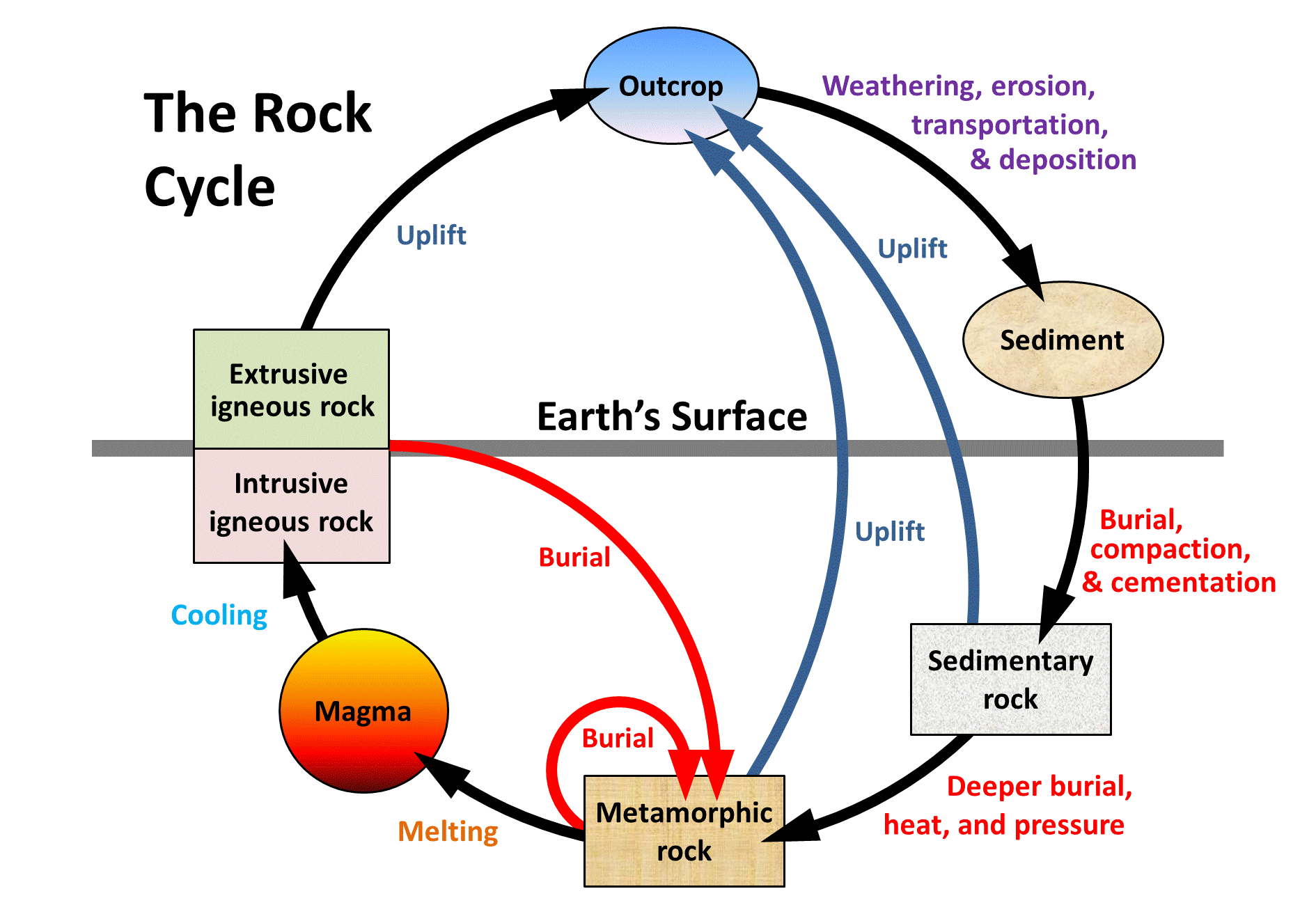
Graphic: Weathering & Erosion in Rock Cycle – Shows how rocks break and sand forms.
7. Quick Revision Table (Memorise this!)
| Feature | Physical Change | Chemical Change |
|---|---|---|
| New substance? | No | Yes |
| Reversibility | Mostly yes | Mostly no |
| Energy (heat/light) | Sometimes | Usually yes |
| Examples | Melting, folding, boiling | Rusting, burning, cooking, digestion |
| Test | Same material back | Lime water milky / new smell/colour |
Let Us Enhance Our Learning (NCERT Questions – Key Answers for Exam):
- Characteristics of physical change → No new substance, usually reversible.
- Lime water + CO₂ → Milky (chemical).
- Rusting = chemical (new rust formed).
- Burning magnesium = chemical (new oxide + heat/light).
- Examples around you → List 3 physical + 3 chemical (use table above).
Pro Tips for Exams & Memory:
- Always ask: “New substance formed?” → Decides physical or chemical.
- Draw the comparison table in your notebook.
- Do all activities at home – they are fun and help you remember forever!
- Link with previous chapters: Metals rust (Ch 4), Acids/bases (Ch 2).
You now have complete, detailed, easy-to-remember notes of the full Chapter 5 – straight from the new Curiosity book! Revise the table twice daily and you will score full marks. If you want mind maps or more activities, just ask! 🚀