Class 7 Science Curiosity (New NCERT Book 2026-27)
Chapter 4: The World of Metals and Non-metals
Full Detailed Notes – Easy to Remember
Introduction (Story to Remember)
Yashwant and Anandi visit an ironsmith (Sudarshan uncle) in Rajasthan. He makes daily items like tawa, buckets, chimta, farming tools (phawra, kulhadi, etc.) using iron + wood handles + coal for heating. Key takeaway: Metals can be shaped by heating and hammering. This chapter explores why metals behave differently from non-metals in daily life.
Quick Memory Tip: Think of an ironsmith’s workshop – heat, hammer, shape – all because of special metal properties!
1. Physical Properties of Metals vs Non-metals (Main Differences – Easy Table for Revision)
| Property | Metals (e.g., Copper, Aluminium, Iron) | Non-metals (e.g., Sulfur, Coal, Wood) | Memory Trick |
|---|---|---|---|
| Lustre (shine) | Shiny like mirror (metallic lustre) | Dull, no shine | Metals = “Mirror shine” |
| Hardness | Mostly hard (except Na, K – soft like butter; Hg – liquid) | Soft or brittle | Most metals = “Hard as nail” |
| Malleability | Can be beaten into thin sheets | Break into pieces (brittle) | Malleable = “Hammer flat like roti” |
| Ductility | Can be drawn into thin wires | Cannot be drawn into wires | Ductile = “Pull into long wire” (Gold = 2 km wire from 1 gram!) |
| Sonority | Produce ringing sound when struck | Dull sound | Sonorous = “Ring like bell/ghungroo” |
| Heat Conduction | Good conductors | Poor conductors | Metals = “Heat travels fast” |
| Electricity Conduction | Good conductors | Poor conductors | Metals = “Current flows easily” |
Mnemonic for Metal Properties: LMD SCHE Lustre Malleable Ductile Sonorous Conductors (Heat + Electricity) Hard (mostly) Except few soft ones.

Malleability in action (hammering iron into sheet)
Ductility example (copper/gold wires used in ornaments, instruments, electrical fittings)
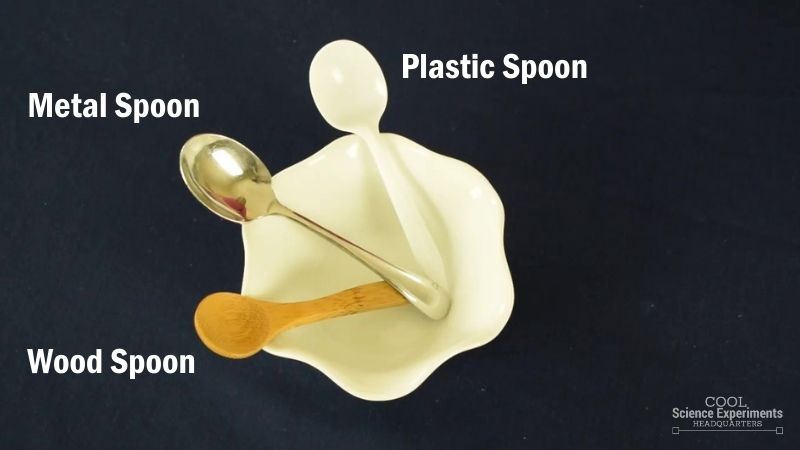
Heat conduction (metal spoon gets hot fast; wooden spoon stays cool – handles of pans are wooden for safety)

Electricity conduction tester (bulb glows only with metals like aluminium, iron, copper; no glow with sulfur, wood, plastic)
2. Chemical Properties: Effect of Air & Water
A. On Iron (Rusting – Most Important!)
- Iron objects turn brown (rust) only when both air + water (moist air) are present.
- Experiment to remember (3 bottles):
- Bottle A: Iron nail + dry air (silica gel) → No rust
- Bottle B: Iron nail + water only (boiled + oil layer) → No rust
- Bottle C: Iron nail + water + air → Brown rust forms
- Conclusion: Rust needs moist air (oxygen + water vapour).
- Rust = Iron oxide (brown deposit).
- Process = Rusting (type of corrosion).
- Prevention: Paint, oil, grease, galvanisation (zinc coating).
- Fun Fact: Iron Pillar of Delhi (1600+ years old) has almost no rust due to ancient Indian metallurgy!
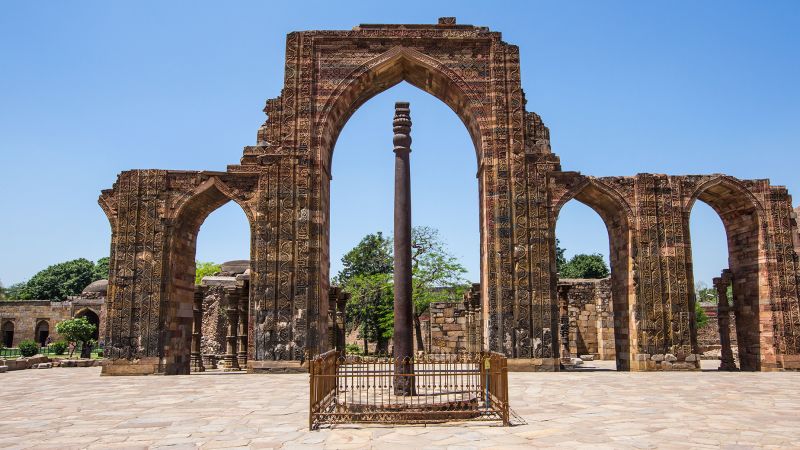
Iron Pillar of Delhi – ancient wonder with no rust!
Memory Trick for Rusting: RUST = Requires Uninterrupted Supply of Two (air + water).
B. On Other Metals (Magnesium)
- Magnesium ribbon burns with dazzling white flame → white ash (magnesium oxide).
- Magnesium oxide + water → basic solution (turns red litmus blue).
- General rule: Metal oxides are basic.
Magnesium burning (white flame + basic ash)
C. On Non-metals (Sulfur)
- Sulfur burns → sulfur dioxide gas.
- Gas + water → sulfurous acid (acidic – turns blue litmus red).
- Sulfur + water → no reaction.
- General rule: Non-metal oxides are acidic.
- Non-metals are soft, dull, brittle, poor conductors, non-sonorous.
- Examples: Oxygen, carbon, nitrogen, phosphorus (stored in water), chlorine, iodine.
Memory Tip: Metals + oxygen = Basic (like base in cricket – strong). Non-metals + oxygen = Acidic (sour like lemon).
3. Uses in Everyday Life (Very Important for Exams)
Metals:
- Aluminium → food packaging (cheap, foldable sheets).
- Copper, aluminium → electrical wires.
- Iron → tools, buildings, vehicles.
- Gold → jewellery (most malleable + ductile).
- Sodium → stored in kerosene (reacts violently with air/water).
Non-metals (Never think they are useless!):
- Oxygen → breathing (life without it = impossible).
- Carbon → building block of life (proteins, carbs, fats).
- Nitrogen → fertilisers for plant growth.
- Chlorine → water purification.
- Iodine → antiseptic on wounds.
Memory Tip: Metals = Strong & shiny tools/wires. Non-metals = Invisible heroes (air we breathe, food we eat).
4. In a Nutshell (Revise in 2 Minutes)
- Metals: Lustrous, malleable, ductile, sonorous, good conductors; oxides basic; corrode in moist air.
- Non-metals: Dull, brittle, poor conductors; oxides acidic; mostly no reaction with water.
- 118 elements known → metals + non-metals are elements (cannot be broken further).
- Both are essential – metals for strength, non-metals for life processes.
Let Us Enhance Our Learning (Key Answers for Quick Revision)
- (i) Aluminium
- (iv) Sodium
- (i) F (ii) F (metal oxides basic) (iii) T (iv) F (they conduct heat)
- Only few metals (gold, silver) are malleable + ductile + lustrous + non-corrosive.
- Match: (i)-c Copper (ii)-e Gold (iii)-a Oxygen (iv)-d Nitrogen (v)-b Chlorine
- Mg → basic oxide; S → acidic oxide.
- Flow chart: Magnesium/Sulfur → Ash/Gas → Basic/Acidic (litmus test).
- Copper or Iron (good conductors of heat).
- Nail in oil (no air + water contact). 10-12. Properties decide uses (as explained above).
Exploratory Projects (For Extra Marks): Dhokra art, metal map of India, smartphone metals, debate on metal use.
Pro Tip for Exams: Always remember LMD SCHE for metals + rust needs moist air + oxides (basic vs acidic). Draw the 3-bottle rust experiment and litmus test in answers – teachers love diagrams!
These notes are complete, original, and made super easy with mnemonics, tables, and visuals. Revise once daily – you will remember everything! Study well! 🚀