Class 8 SST — Chapter 6 — The Parliamentary System: Legislature and Executive 🏛️
Introduction: India's Democratic Engine
After independence, India chose a Parliamentary System so that ordinary citizens could shape the country. The Constitution gave every adult (18+) the right to vote — called Universal Adult Franchise. No one is left out because of caste, gender, religion, or money.
Memorable Definition: Parliamentary Democracy = People elect representatives → Representatives make laws and control the government → Government works only with people's consent.
Citizens vote directly for Lok Sabha members. The party or group with the most seats forms the government. Parliament has been working since 1952 (18 Lok Sabhas so far).
Easy to Remember: Think of Parliament as the "People's Voice Factory" — it makes rules and keeps the government in check.


The New Sansad Bhavan looks like a soft triangle (symbol of balance and inclusivity). It is eco-friendly and decorated with symbols of India's heritage — peacocks, lotuses, tribal art, and freedom fighters.
Structure of Parliament — Bicameral Like a Two-Wheeler!
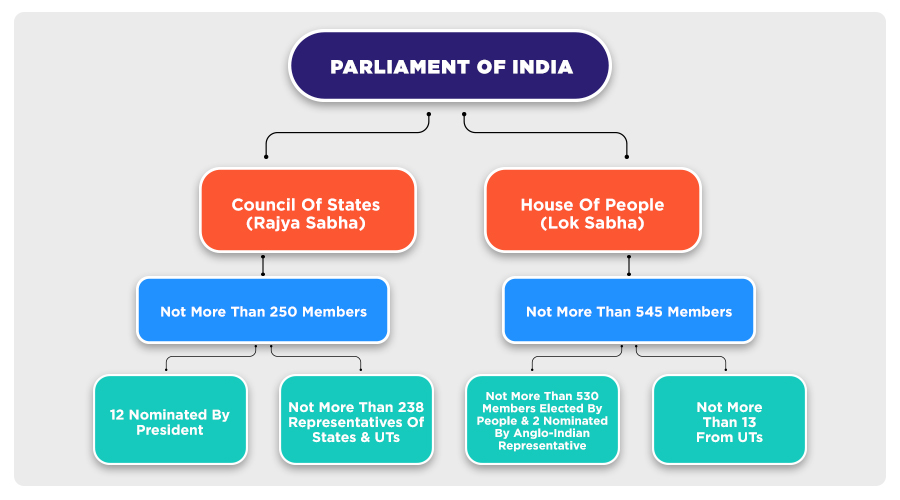
Bicameral means two chambers (houses):
- Lok Sabha (House of the People) — Lower House
- Rajya Sabha (Council of the States) — Upper House
- President — Part of Parliament (like the third wheel for balance)
Why two houses? Lok Sabha represents the people directly. Rajya Sabha represents states and gives a second thoughtful look at laws. This shows India's Federalism (power shared between Centre and States).
Quick Comparison (Easy Table to Remember):
| Feature | Lok Sabha (Lower House) | Rajya Sabha (Upper House) |
|---|---|---|
| Members | Max 550 (directly elected by people) | Max 250 (indirectly elected by state MLAs + 12 nominated) |
| Election | Every 5 years (direct vote) | Permanent body (1/3 retire every 2 years) |
| Who it represents | People of India | States & Union Territories |
| Power on Money Bills | More power (starts here) | Limited |
| Presiding Officer | Speaker | Vice-President (Chairperson) |
Visual Tip: Imagine a big circle (Parliament) with President on top, Lok Sabha on one side (people's power), Rajya Sabha on the other (states' wisdom).

Functions of Parliament — 4 Super Powers (Remember "CLEF")
- Constitutional Functions — Elects President & Vice-President, amends Constitution.
- Law-making — Main job (turns Bills into Acts).
- Executive Accountability — Questions ministers, checks government.
- Financial Control — Approves Budget and spending.
Question Hour = First hour of every session. MPs ask tough questions to ministers — like a public report card!
How a Bill Becomes Law — Step-by-Step Journey (Memorable Flow)
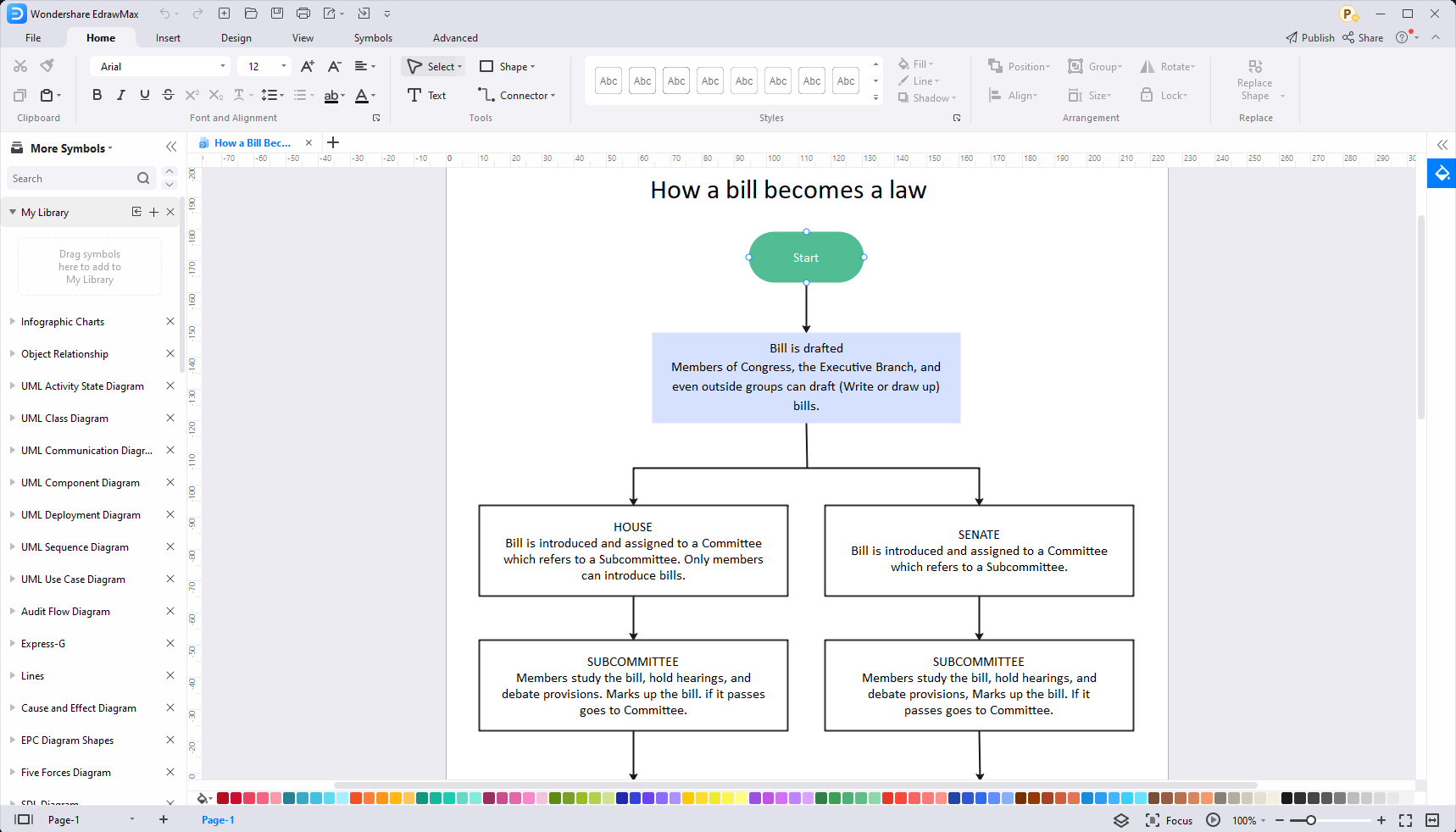
A Bill is a "proposed law" (like a rough draft).
- Introduced in either House (Money Bills only in Lok Sabha).
- First Reading — Just introduced.
- Second Reading — Discussed, sent to Standing Committee (experts from all parties study it deeply).
- Committee suggests changes.
- Clause-by-clause debate and voting.
- Passed by one House → Goes to the other House.
- Both Houses agree → Sent to President for assent.
- President signs → Published in Gazette → Becomes Law/Act.
Mnemonic: "I D C P V" → Introduce → Discuss/Committee → Pass both Houses → President → Law!
Real Example: Right to Education (RTE) Act 2009 — Made education a fundamental right for children 6-14 years. It went through committee review on funding and teachers before becoming law.
The Executive — The "Doers" of the Government
Executive implements laws made by Legislature.
- President: Nominal (ceremonial) Head of State. Appoints PM, summons Parliament, gives assent to bills. Acts on advice of Council of Ministers (except in some crises).
- Prime Minister + Council of Ministers: Real Executive. PM is the leader of the majority in Lok Sabha. Ministers run different ministries. They follow Collective Responsibility — if one minister fails, the whole team can be blamed.
Memorable Story: In 1956, Railway Minister Lal Bahadur Shastri resigned after a train accident (even though not directly his fault) — shows moral responsibility!
Civil Servants (Bureaucrats): They do the daily work under ministers.
Difference between Legislature & Executive (Super Easy Table):
| Aspect | Legislature (Parliament) | Executive (PM + Ministers) |
|---|---|---|
| Main Job | Makes laws & checks government | Implements & runs daily administration |
| Accountability | Questions Executive | Answers to Parliament |
| Budget | Approves it | Prepares & spends it |
| Power Balance | Controls money & laws | Day-to-day decisions |
Judiciary — The Referee (Checks & Balances)
Courts interpret laws, protect Fundamental Rights, and can strike down unconstitutional laws or actions. No branch can become too powerful — this is Separation of Powers.
State Level — Same System in Mini Form
Every state has:
- Governor (like President — nominal)
- Chief Minister + Council of Ministers (real power)
- Vidhan Sabha (like Lok Sabha)
Three Lists (Easy Memory Trick — "USC"):
- Union List → Centre only (Defence, Foreign Affairs)
- State List → States only (Police, Agriculture)
- Concurrent List → Both (Education, Forests) — Centre wins if clash.
Challenges & How to Fix Them
Problems: Disruptions, low attendance, too few sitting days. Solutions: Citizens must stay informed, vote wisely, and participate in debates. Young and diverse leaders can make it stronger.
Final Memorable Tip: Parliament (Legislature) = Brain that thinks and makes rules. Executive = Hands and legs that run the country. Judiciary = Eyes that watch and ensure fairness. Together they make Indian Democracy work for 140+ crore people!
Revise with these headings, tables, and visuals daily. Draw the structure diagram yourself — it will stick forever. Great for your learning website — simple language, pictures, and short points make it super easy to remember! 🗳️🏛️