
Class 8 SST — Chapter 5 — Universal Franchise and India’s Electoral System 🗳️
1. What is Universal Adult Franchise? (Easy Definition to Remember)
Universal Adult Franchise (also called Universal Suffrage) means: "Every adult citizen (18 years and above) has the right to vote — One Person, One Vote, and every vote has equal value."
- "Universal" = Applies to everyone equally.
- "Adult" = Age 18 or older (in India).
- No discrimination on the basis of caste, creed, religion, gender, education, income, or social status.
Memorable Mnemonic: U-A-F = Universal = All Adults Free to Vote Equally It is a cornerstone of Indian democracy. The Constitution makers boldly gave this right right from the first general elections in 1951-52 — a huge step because at that time many countries still had restrictions based on education or property.
Article 326 of the Indian Constitution guarantees this right for elections to Lok Sabha, State Legislative Assemblies, and local bodies (panchayats & municipalities).
Key Point to Remember: Your vote is yours alone — no one can vote on your behalf.
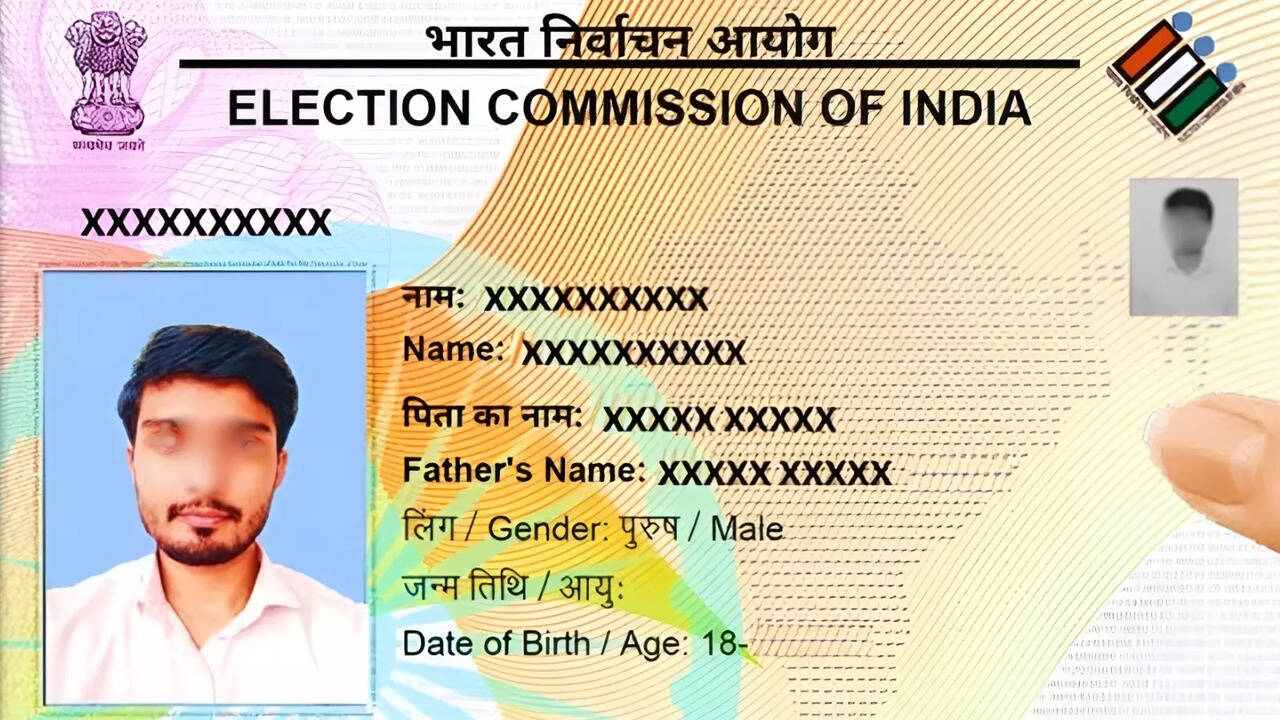
(Above: Election Commission of India logo and a sample Voter ID card — every eligible citizen gets one to prove they can vote.)
2. What is an Electoral System?
Electoral System = The complete set of rules and methods used to conduct elections fairly.
It answers:
- Who can vote? (Universal Adult Franchise)
- How do people vote? (Secret Ballot)
- How are votes counted and winners declared?
- Who organises everything?
India’s Electoral System is based on:
- Universal Adult Franchise
- Secret Ballot (your choice remains hidden — no one knows whom you voted for)
- First-Past-The-Post (FPTP) system (the candidate with the highest number of votes in a constituency wins, even if not majority)
- Direct Elections for Lok Sabha, Vidhan Sabha, and local bodies
- Indirect Elections for Rajya Sabha, President, etc.
Memorable Tip: Think of it as a big fair game with strict rules so that the voice of the people decides the government.
3. How India’s Electoral System Works (Step-by-Step — Easy Flow)
India conducts one of the largest democratic exercises in the world!
Big Numbers to Remember (2024 Lok Sabha example):
- Nearly 98 crore (980 million) voters
- 543 Lok Sabha seats
- Over 10 lakh polling stations
Step-by-Step Voting Process (Super Easy to Recall):
- Voter List & Voter ID: Your name must be in the electoral roll. You need EPIC (Electoral Photo Identity Card) or other approved ID.
- Polling Booth: Every area has a nearby polling station (even in remote forests or for single voters!).
- At the Booth:
- Polling officer checks your name & ID.
- Your finger is inked (indelible ink — proves you voted).
- You get a slip and enter the voting compartment (curtain for privacy).
- Casting Vote using EVM + VVPAT:
- EVM (Electronic Voting Machine) — Ballot Unit shows candidate names + party symbols.
- Press the blue button next to your choice → Beep sound confirms.
- VVPAT (Voter Verifiable Paper Audit Trail) prints a slip showing your vote — you can see it for 7 seconds (for verification) but it falls into a box.
- Secret Ballot: No one sees your choice — protects freedom.
- Counting: Done after all phases. Highest votes win the seat.
Memorable Mnemonic for EVM Process: Check → Ink → Press Blue → Beep + See Slip → Done!
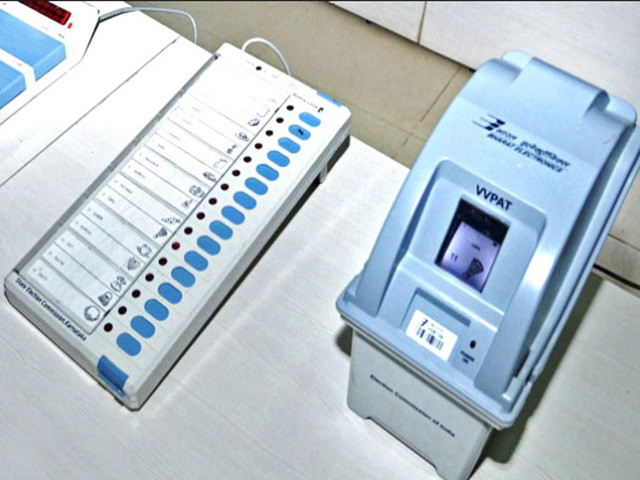
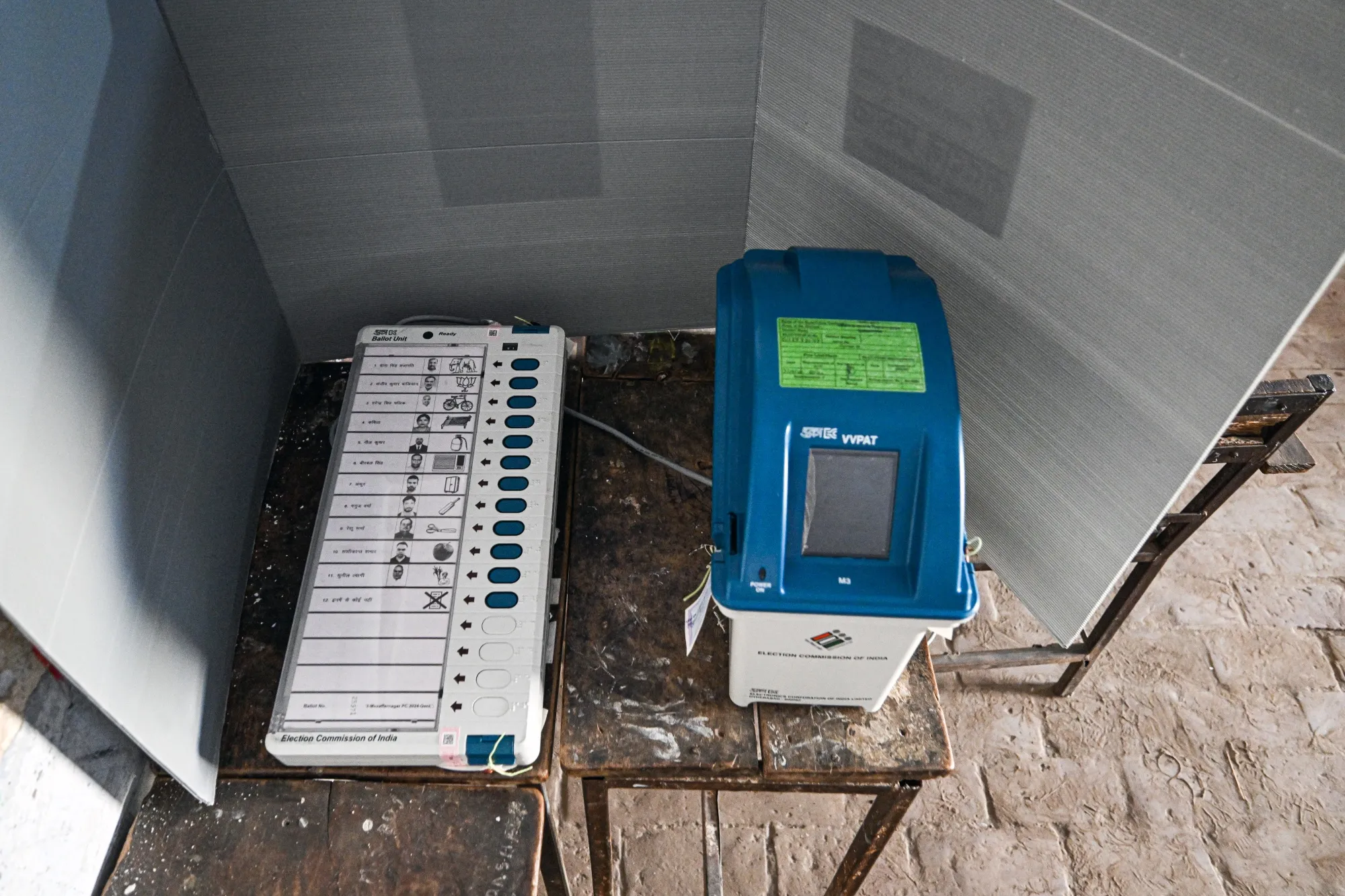
(Above: Real EVM Ballot Unit with party symbols + VVPAT machine. Easy to recognise in exams!)

(Above: A polling booth in action — voters waiting or casting vote. Shows how inclusive it is.)
4. Role of Election Commission of India (ECI)
- Independent constitutional body.
- Conducts free and fair elections.
- Prepares voter lists, announces dates, enforces Model Code of Conduct (rules for parties during elections).
- Uses technology (EVMs, VVPAT) for transparency.
- Provides facilities: ramps for disabled, postal ballots for seniors/army, special booths, etc.
Motto to Remember: ECI = Guardian of Democracy — ensures elections reflect the will of the people.
5. Direct vs Indirect Elections (Quick Table for Memory)
Type Meaning Examples in India Easy Remember Direct People vote directly for candidate Lok Sabha, State Assemblies, Panchayat "People Directly Choose" Indirect Representatives elect someone Rajya Sabha, President "Chosen by Chosen People"
| Type | Meaning | Examples in India | Easy Remember |
|---|---|---|---|
| Direct | People vote directly for candidate | Lok Sabha, State Assemblies, Panchayat | "People Directly Choose" |
| Indirect | Representatives elect someone | Rajya Sabha, President | "Chosen by Chosen People" |
6. Why India’s System is Special (Points to Remember)
- Inclusive: Even a single voter in a remote area gets a booth.
- Scale: World's largest democracy.
- Technology + Trust: EVMs are fast, reduce errors, and VVPAT adds verifiability.
- Faith in Common Man: As Alladi Krishnaswami Ayyar said in Constituent Assembly — a bold experiment never tried before on such scale.
Quick Revision Tips:
- UAF = 18+ years, equal vote, no discrimination.
- Secret Ballot = Privacy of choice.
- EVM = Electronic, fast, with symbols.
- VVPAT = Paper trail for trust.
- ECI = Organises everything fairly.
Activity Idea for Memory: Draw a simple flowchart — Voter → Booth → EVM → Beep → Ink → Democracy Wins!
These notes are short, visual-friendly, and use simple language with mnemonics so you can revise quickly before exams. Focus on why universal franchise matters and how voting actually happens — that's what usually comes in questions.
Study well — your vote in future will shape India! 🇮🇳🗳️