Class 8 Science Chapter 5: Exploring Forces
(Curiosity – NCERT Textbook of Science for Grade 8, 2026-27)
Easy-to-Remember Detailed Notes (A-Z Coverage) These notes are made super simple, fun, and memorable with daily examples, bullet points, mnemonics, tables, and key activities from the NCERT book. Read once, revise with pictures, and you’ll remember everything forever! No boring paragraphs – only clear, student-friendly points.
1. Introduction (The Story that Starts the Chapter)
Sonali and Ragini go cycling on a windy day.
- Wind pushes them back (force).
- Uphill: harder to pedal (force needed).
- Downhill: bicycle speeds up without pedalling (force pulling down).
- Bell ringing, turning handle: all involve push/pull.
Mnemonic: “Wind, Hill, Speed – Forces are everywhere in our ride!”
Probe and Ponder (Think & Remember):
- Why harder uphill? (Gravity pulls down + friction)
- Why slip on wet floor? (Less friction)
- Why feel light at top of swing? (Gravity balanced for a moment)
5.1 What is a Force?
Definition (Super Simple): Force = Push or Pull on an object due to interaction with another object.
Activity 5.1 (Do at Home): Take a cardboard box. Try pushing, pulling, lifting, carrying. Every movement needs a force!

Key Point (Easy Mnemonic): Push or Pull = Force (PPF – like “Please Push Forcefully!”)
SI Unit: Newton (N) – named after Sir Isaac Newton.
5.2 What Can a Force Do? (Effects of Force – 5 Magical Powers!)
A force can:
- Make a resting object move.
- Change speed (speed up or slow down).
- Change direction.
- Change shape (e.g., press balloon).
- Do a combination of above.
Activity 5.2 (Table for Quick Revision):
| S.No. | Action Example | Push/Pull | Effect |
|---|---|---|---|
| 1 | Friend stops your cycle | Pull | Stops/decreases speed |
| 2 | Hit ball with bat | Push | Changes direction |
| 3 | Press balloon | Push | Changes shape |
Mnemonic for Effects: “Move, Speed, Direction, Shape – MSDS = Force’s Super Powers!”
5.3 Forces Need Interaction (Two Objects Always!)
- Force happens only when two objects interact.
- Example: Your hand pushes table → table pushes hand back.
- When interaction stops → force stops.
A Step Further (Remember): Even at rest, forces can balance each other (balanced forces – you’ll learn more later).
5.4 Types of Forces (Two Big Families!)
A. Contact Forces (Need Touch!)
- Muscular Force
- Caused by contraction of muscles.
- Examples: Walking, lifting bag, chewing food, heart beating.
- Animals use it too (elephants pulling logs, birds flying).
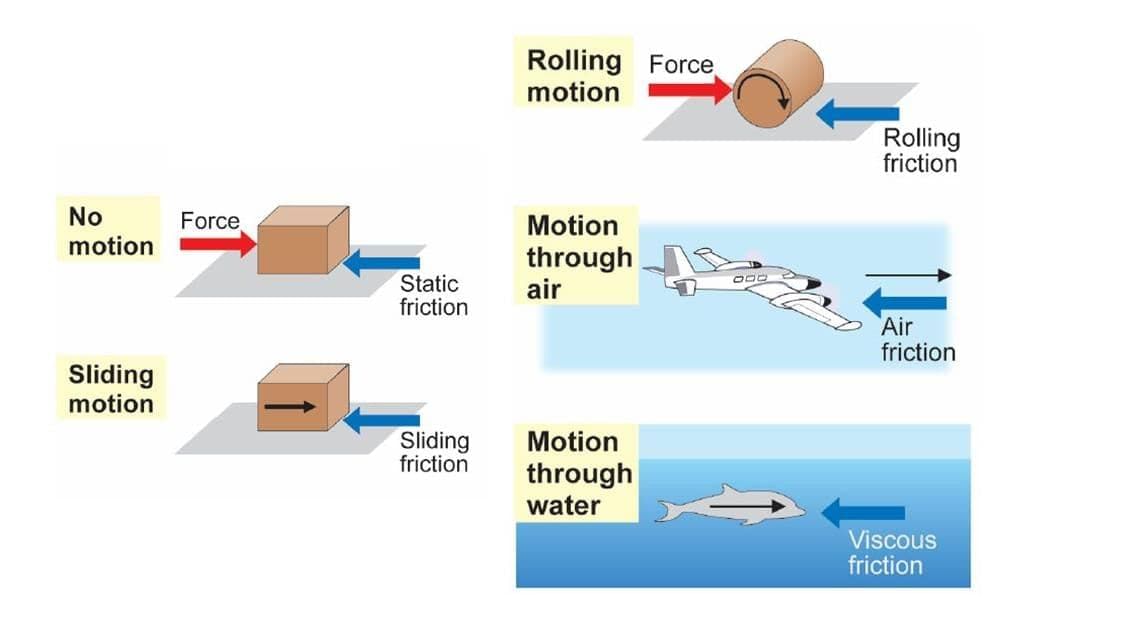
- Frictional Force (Friction – Our Friend & Enemy!)
- Opposes motion.
- Acts opposite to direction of movement.
- Caused by tiny irregularities (bumps) on surfaces locking together.
- More on rough surface, less on smooth.
- Also in air and water (air friction slows parachute, water friction slows fish).
Activity 5.3 & 5.4: Push a box on table, floor, glass, sand. It stops quickest on roughest surface → Friction depends on surface nature.
Mnemonic: “Friction = Rough Road Slows You Down (RRSYD)”
B. Non-Contact Forces (Act from Distance – Magic!)
- Magnetic Force
- Magnet attracts iron, nickel, cobalt.
- Like poles repel, unlike attract.
- Example: Compass needle points North.
Activity 5.5: Ring magnets on stick – like poles float apart (you feel the push!).
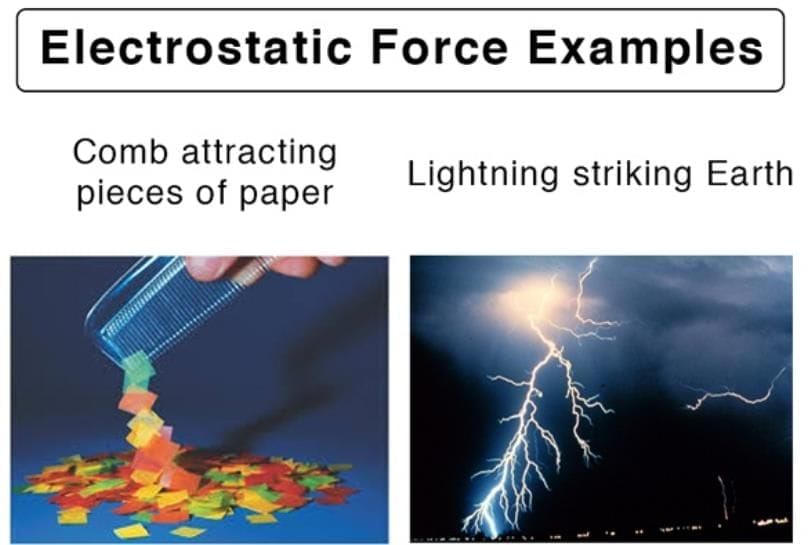
- Electrostatic Force
- Build-up of static charges by rubbing.
- Like charges repel, unlike attract.
- Example: Rub plastic scale with polythene → attracts paper bits.
- Rub two balloons with wool → they repel.
Activity 5.6 & 5.7: Rub & test – paper jumps, balloons fly apart!
Mnemonic: “Static = Rub & Zap! Like charges hate each other (repel), opposite love (attract).”
- Gravitational Force (Earth’s Pull – Gravity)
- Earth pulls everything towards itself.
- Always attractive (never repels).
- Causes objects to fall down.
- Weight = Gravitational force on object.
Activity 5.8: Throw ball up → it always comes down.
Mnemonic: “Gravity = Earth’s Invisible Hug Pulling Everything Down!”
5.5 Weight and Its Measurement
- Weight = Force with which Earth pulls an object (unit = N).
- Mass = Amount of matter (unit = kg) – remains same everywhere.
- Weight changes (Moon weight = 1/6th Earth weight).
Activity 5.9 to 5.12 (Spring Balance – Your Weight Hero!):
- Spring stretches more for heavier object.
- Read the scale carefully (least count = 0.2 N usually).
Table: Weight on Different Planets (Remember this!)
| Planet | Mass (kg) | Weight (N) |
|---|---|---|
| Earth | 1 | 10 |
| Moon | 1 | 1.6 |
| Mars | 1 | 3.8 |
| Venus | 1 | 9 |
| Jupiter | 1 | 25.4 |
Mnemonic: “Mass stays same, Weight plays game (changes with gravity)!”

5.6 Floating and Sinking (Buoyant Force – Water’s Upward Push!)
- Liquids exert upthrust (buoyant force) upward on objects.
- If upthrust > weight → floats.
- If weight > upthrust → sinks.
- Depends on density of liquid & object.
Activity 5.13: Push empty bottle in water → feels upward push & bounces back.
Archimedes’ Principle (Easy Version): Upthrust = Weight of liquid displaced.
Ever Heard Of...? Pumice rock floats because it has air pockets (less dense than water).
Snapshots (Quick Revision – One-Line Everything!)
- Force = Push or Pull (N).
- Effects: Move, speed, direction, shape.
- Contact: Muscular + Friction.
- Non-contact: Magnetic + Electrostatic + Gravitational.
- Friction opposes motion (due to bumps).
- Weight = Earth’s pull (changes), Mass = matter (same).
- Buoyant force = Upthrust in liquids.
Why? When? How? (Your Turn to Ask Questions!) Make your own: “Why do we slip on ice?” → Less friction!
Keep the Curiosity Alive (Exercise – Quick Answers for Exam)
- Match the Following: (i) Muscular → (b) Child lifting bag (ii) Magnetic → (e) Compass needle (iii) Frictional → (a) Ball stops on ground (iv) Gravitational → (c) Fruit falls (v) Electrostatic → (d) Balloon attracts hair
- True/False: (i) True (ii) False (friction decreases speed) (iii) False (there is force).
- Two charged balloons repel because like charges repel.
- Coin sinks (density > water), wood floats (density < water).
- Forces on ball: (i) Upward: Gravity down (slows) (ii) Downward: Gravity down (speeds up) (iii) At top: Only gravity down.
- To stop before A: Increase friction (rough surface). After A: Reduce friction (smooth or oil).
- Slip on ice: Very less friction.
- Yes – unbalanced force causes non-uniform motion.
- Moon has less gravity (1/6th). Mass remains same.
- (iv) w₃ > w₁ > w₂ (deeper sink = heavier).
Discover, Design, Debate (Fun Homework Ideas):
- Rub different materials & test charging.
- Story: “What if gravity disappears?” (Draw cartoon strip!).
- Debate: Friction – friend or enemy?
Pro Tip for Exam: Draw labelled diagrams (spring balance, magnets, friction bumps, buoyant force) – they fetch full marks! Revise the 5 effects of force and 3 non-contact forces daily – you’re ready to score 100/100!
Stay curious – forces are everywhere! 🚀